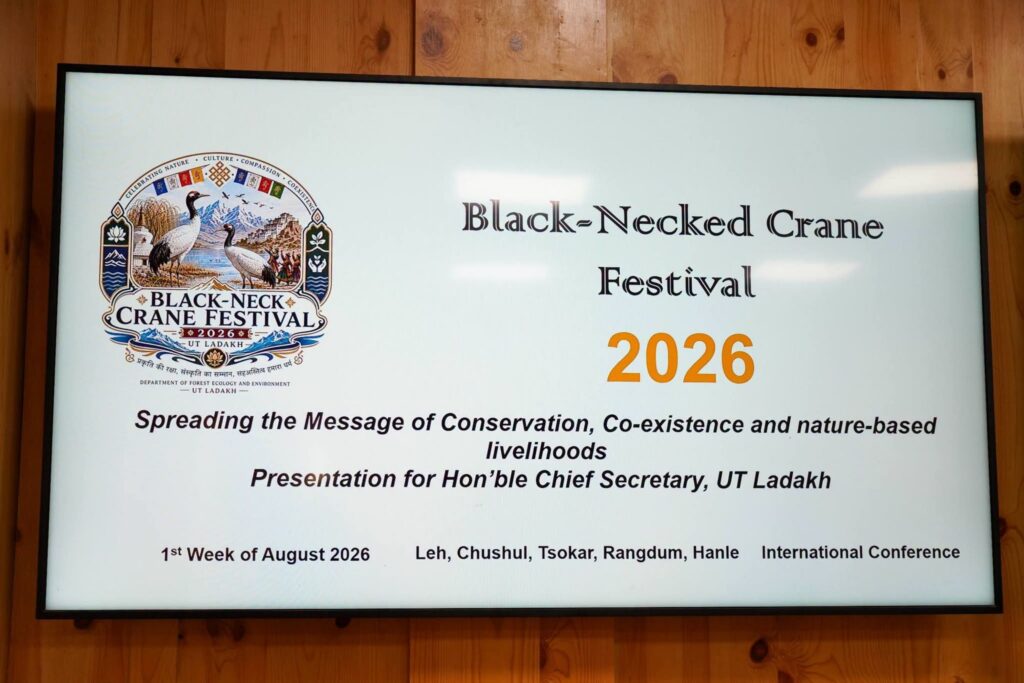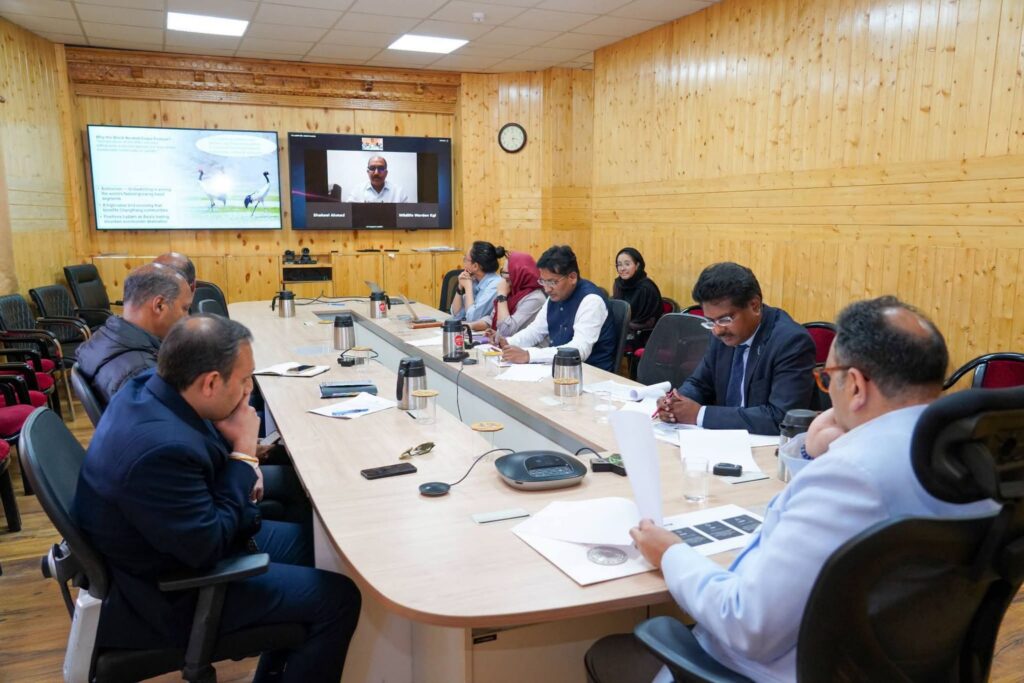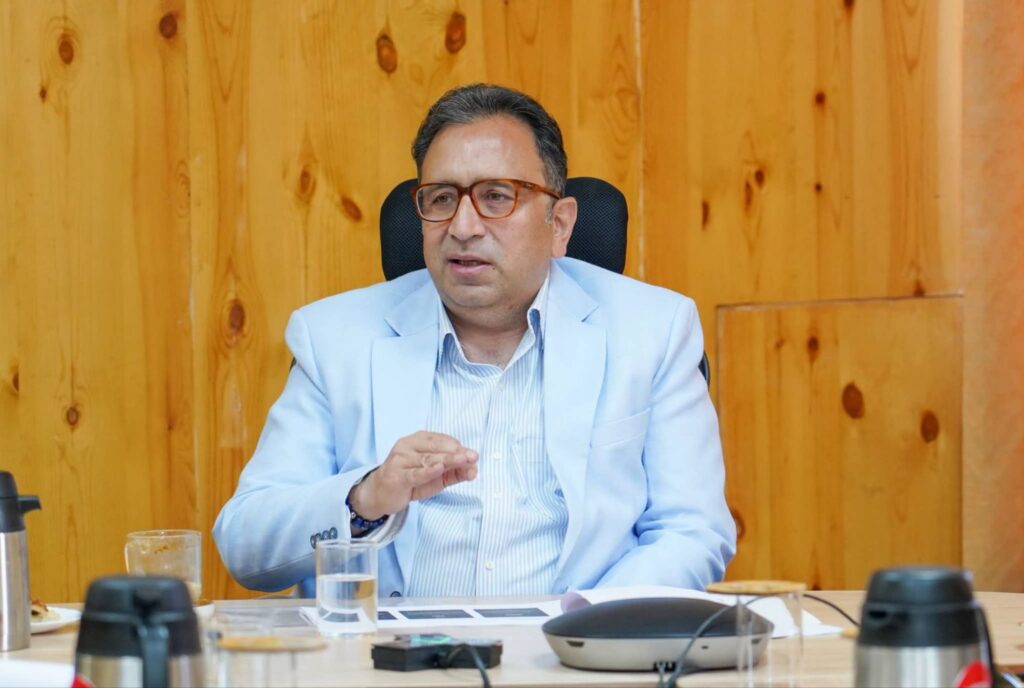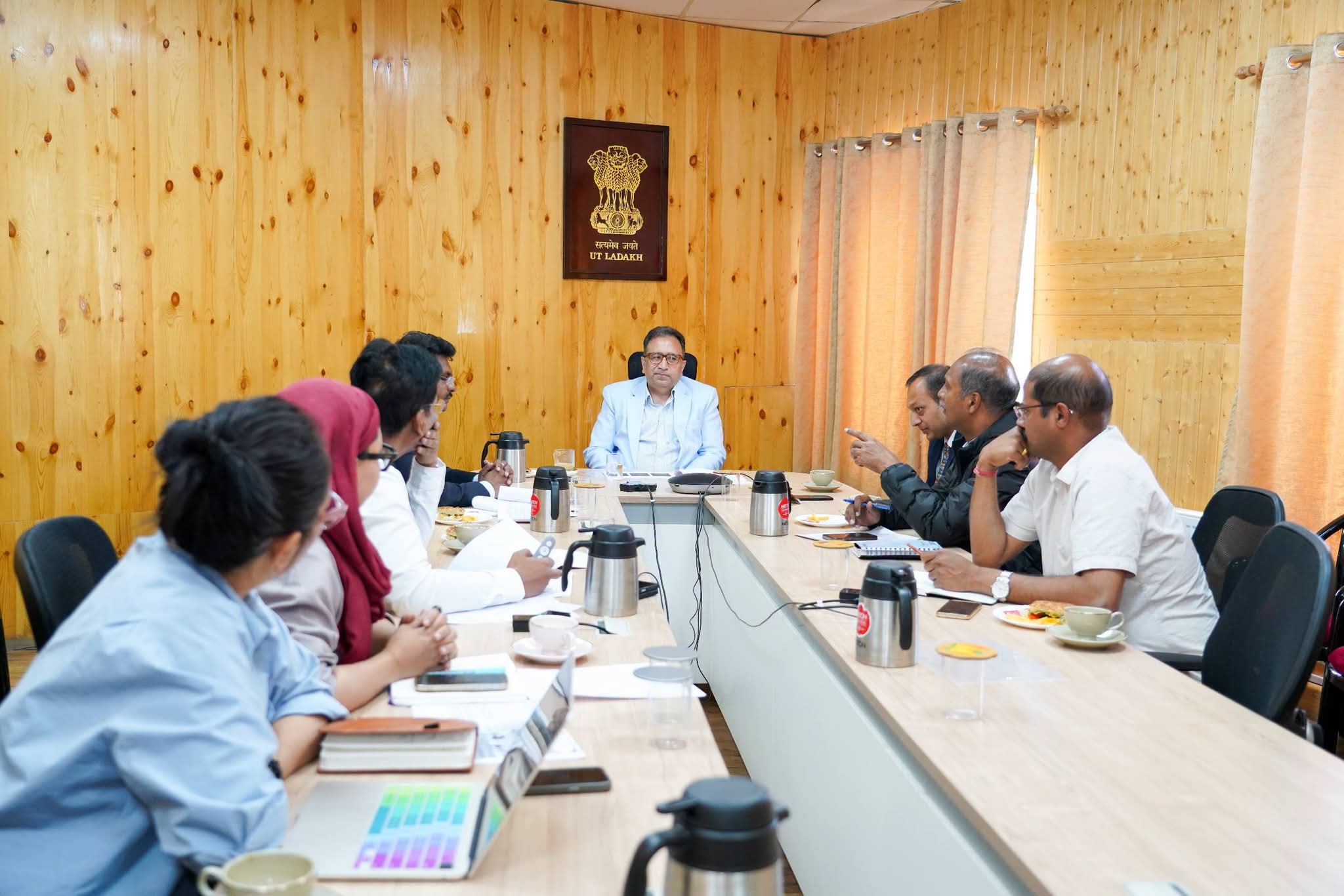
Leh, June 25: Chief Secretary of the Union Territory of Ladakh, Ashish Kundra, today called for the organization of a globally recognized Black-necked Crane Festival that remains firmly rooted in the participation and aspirations of local communities. Chairing a review meeting on the proposed Black-necked Crane Festival 2026, he emphasized that the initiative should serve as a model for conservation-linked livelihoods, sustainable tourism, and community-led environmental stewardship across the Changthang region.
The proposed festival, planned for the second half of August 2026, aims to celebrate the iconic Black-necked Crane while highlighting the ecological, cultural, and economic significance of Ladakh’s high-altitude wetlands. The festival is envisioned as a platform to strengthen conservation awareness, promote responsible tourism, and generate livelihood opportunities for local residents.
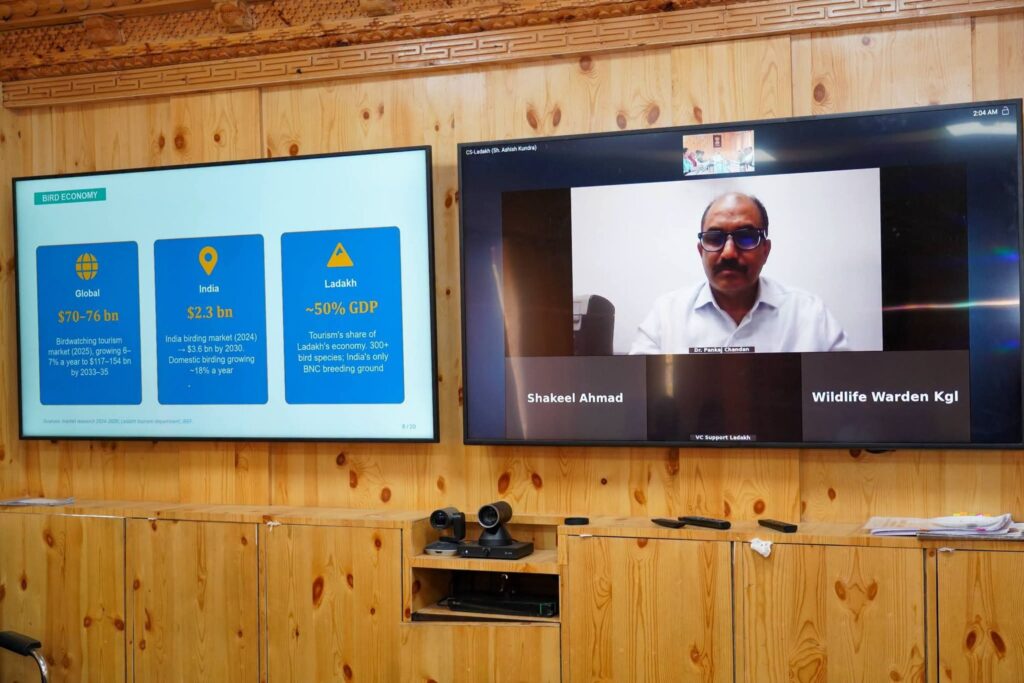
During the meeting, officers presented the concept and vision of the festival, underlining the global importance of the Changthang wetlands ecosystem and the symbolic role of the Black-necked Crane in representing harmony between biodiversity, culture, and spirituality in the Trans-Himalayan region. The presentation also examined the growing global bird tourism market, successful models such as Bhutan’s Black-necked Crane Festival, and opportunities to position Ladakh as a premier destination for birdwatching and nature tourism.
The Chief Secretary highlighted the immense potential of bird tourism as an emerging global sector and stressed the need to leverage Ladakh’s unique biodiversity assets in a sustainable manner. He suggested aligning the festival dates with the peak period for crane sightings and visitor participation while exploring an international dimension to attract researchers, conservationists, photographers, birdwatchers, and nature enthusiasts from across the world.
Emphasizing the importance of local ownership, Shri Kundra directed that the festival remain focused on the Changthang region, where the Black-necked Crane and its habitat are deeply intertwined with local culture and livelihoods. He called for active participation of local communities, conservation groups, educational institutions, tourism stakeholders, and birding organizations in planning and executing the event.
Highlighting community-led conservation as a cornerstone of the initiative, the Chief Secretary proposed the development of trained local nature guides and birding interpreters from Changthang villages, particularly among unemployed youth. Such efforts, he said, would enhance visitor experiences while creating sustainable livelihood opportunities and inspiring a new generation of conservation leaders.
The meeting also reviewed infrastructure and visitor facilities required to support the festival. Shri Kundra stressed the need for bird observation points, interpretation centres, improved visitor amenities, eco-friendly accommodation options, and clearly marked wildlife viewing sites. He directed concerned departments to examine possibilities for strengthening existing facilities in Nyoma, Hanle, and other important locations.
Recognizing the importance of outreach and promotion, the Chief Secretary instructed that a professionally designed dedicated website for the Black-necked Crane Festival be developed within one week. The platform will provide comprehensive information on festival activities, travel details, birdwatching opportunities, and community-based tourism experiences. He further directed the Tourism Department to prominently feature bird tourism and Black-necked Crane-related content across Ladakh’s tourism promotion platforms.
Shri Kundra advised the organizers to revise the festival concept note with a stronger focus on conservation-linked livelihoods, community participation, and sustainable tourism before the proposal is placed before the Hon’ble Lieutenant Governor for further consideration and inauguration planning.
The meeting was attended by Mandeep Mittal, IFS, Rajesh, IFS, Sanjeet Rodrigues, Secretary Tourism, and senior officers from the concerned departments and organizations.