

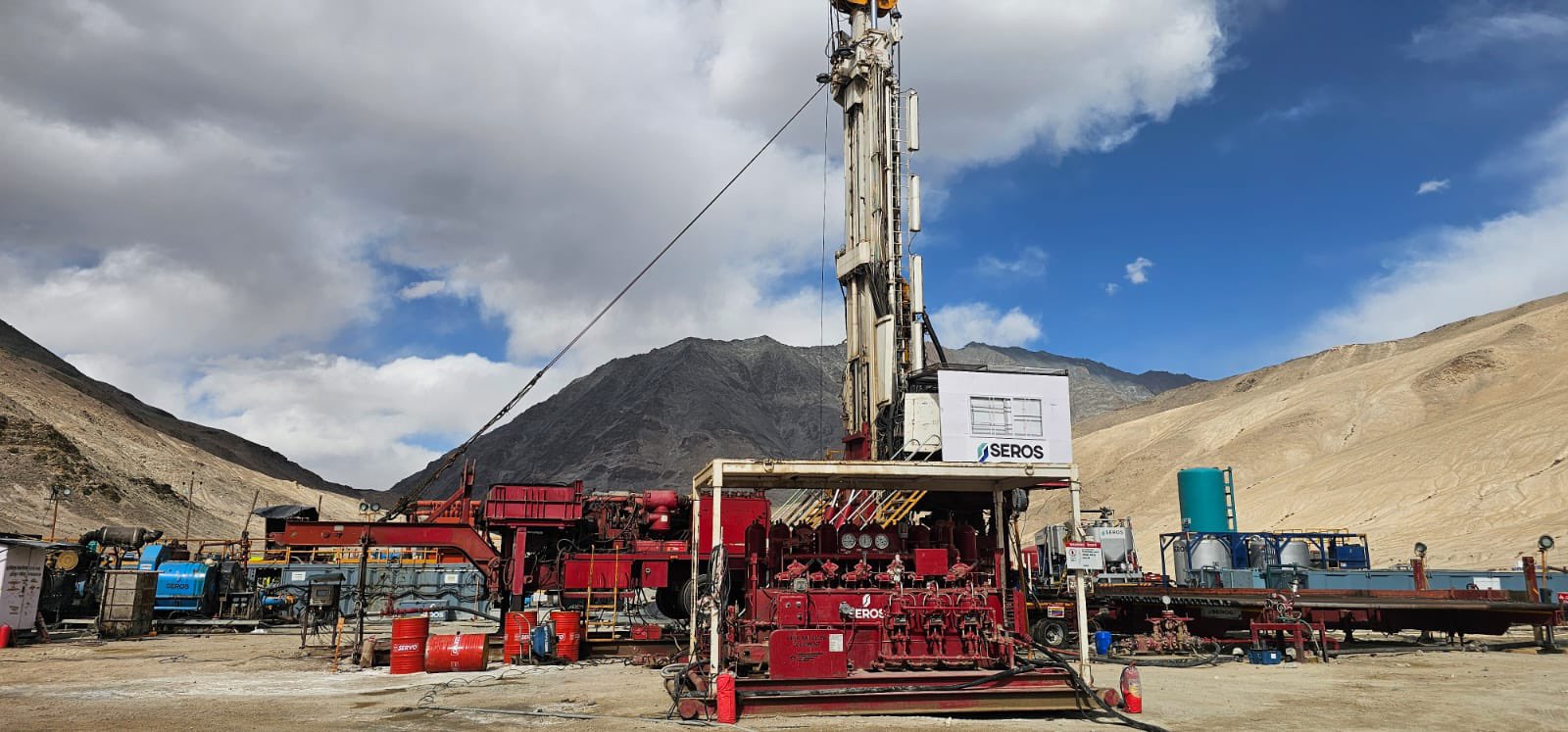
Leh: In a major milestone for India’s clean energy ambitions, Oil and Natural Gas Corporation (ONGC) has announced significant progress in the development of geothermal energy in Ladakh’s Puga Valley, including the successful drilling of India’s deepest geothermal well at a depth of 1,000 metres.
The achievement, highlighted by ONGC in a social media post, comes as part of the corporation’s efforts to support Prime Minister Narendra Modi’s vision for sustainable and alternative energy sources.
The project is being developed in the remote Puga Valley of eastern Ladakh, located at an altitude of over 4,400 metres (14,000 feet), where extreme weather conditions, difficult terrain and complex geological formations have posed major operational challenges.
Aligned with Hon’ble Prime Minister Shri @narendramodi’s vision for alternative and sustainable energy, #ONGC is unlocking Ladakh’s geothermal potential in Puga Valley.
ONGC teams have successfully drilled India’s deepest geothermal well at 1,000 metres, overcoming extreme… pic.twitter.com/FjAAtP4rh0
— Oil and Natural Gas Corporation Limited (ONGC) (@ONGC_) May 25, 2026
ONGC said its technical teams managed to overcome sub-zero temperatures, rugged Himalayan terrain and challenging subsurface conditions to complete the drilling operation, marking a breakthrough in India’s geothermal energy exploration efforts.
The Puga Valley project is considered strategically important as India currently does not have a large-scale commercial geothermal power plant.
The initiative is expected to pave the way for the country’s first geothermal-based electricity generation facility.
Under the project plan, ONGC will establish a 1 MWe pilot geothermal power plant while simultaneously preparing a Detailed Project Report (DPR) for large-term commercial exploitation of geothermal resources in Ladakh.
According to reports, the earlier tripartite Memorandum of Understanding signed in February 2021 between the Ladakh Administration, LAHDC Leh and ONGC Energy Centre was recently extended for another five years after delays caused by harsh climatic conditions and logistical difficulties.
Ladakh Lieutenant Governor Vinai Kumar Saxena approved the extension considering the significance of the project for the region and the country’s renewable energy goals.
Officials said geothermal investigations in Puga Valley have revealed highly promising results. Earlier exploratory drilling had already recorded subsurface temperatures exceeding 240 degrees Celsius at depths of around 400 metres, indicating strong potential for geothermal power generation.
The proposed pilot plant is expected to operate at turbine inlet temperatures close to 200 degrees Celsius.
The project is being viewed as a major step towards reducing dependence on fossil fuels and strengthening India’s energy security through renewable sources.
Experts believe geothermal energy can provide stable, round-the-clock clean power unlike solar and wind energy, which depend on weather conditions.
Beyond electricity generation, the geothermal initiative is also expected to support Ladakh’s long-term vision of becoming a carbon-neutral region.
Combined with ongoing solar energy projects, the Puga Valley development could transform Ladakh into one of India’s leading renewable energy hubs.
ONGC has indicated that further exploration activities, including additional deep drilling and studies in the nearby Chumathang geothermal zone, will continue in the next phase of the project as India moves closer to harnessing geothermal energy on a commercial scale.
