

Leh: In a major development that could redefine Ladakh’s political future, the Centre on Friday moved closer to addressing some of the region’s most important demands after productive talks with representatives of the Leh Apex Body (LAB) and Kargil Democratic Alliance (KDA) in New Delhi.
The high-level meeting between officials of the Union Ministry of Home Affairs (MHA), Ladakhi leaders and elected representatives ended with what participants described as a broad understanding on creating a governance structure tailored specifically for Ladakh’s unique administrative, cultural and strategic requirements.
At the centre of the discussions was the proposal for a democratically elected body for Ladakh that would exercise substantial authority in governance, administration and financial decision-making. Leaders who attended the meeting said the proposed institution could function with powers similar to those enjoyed by legislatures in other regions, though its final structure and name are still under discussion.
Importantly, the proposed framework is understood to place the Union Territory’s bureaucracy — including the Chief Secretary and senior officials — under the supervision of the elected executive leadership.
Leaders from both Leh and Kargil described the talks as one of the most constructive engagements held with the Centre since Ladakh became a Union Territory in 2019.
LAB co-chairman Chering Dorjay Lakruk said the discussions produced an “in-principle understanding” on establishing a representative governance structure for Ladakh.
According to leaders present during the talks, there was also broad agreement on extending constitutional safeguards to Ladakh through provisions similar to Article 371, which offers special protections in several northeastern and hill states. Such safeguards are expected to help preserve Ladakh’s fragile ecology, cultural identity, land rights and local employment opportunities.
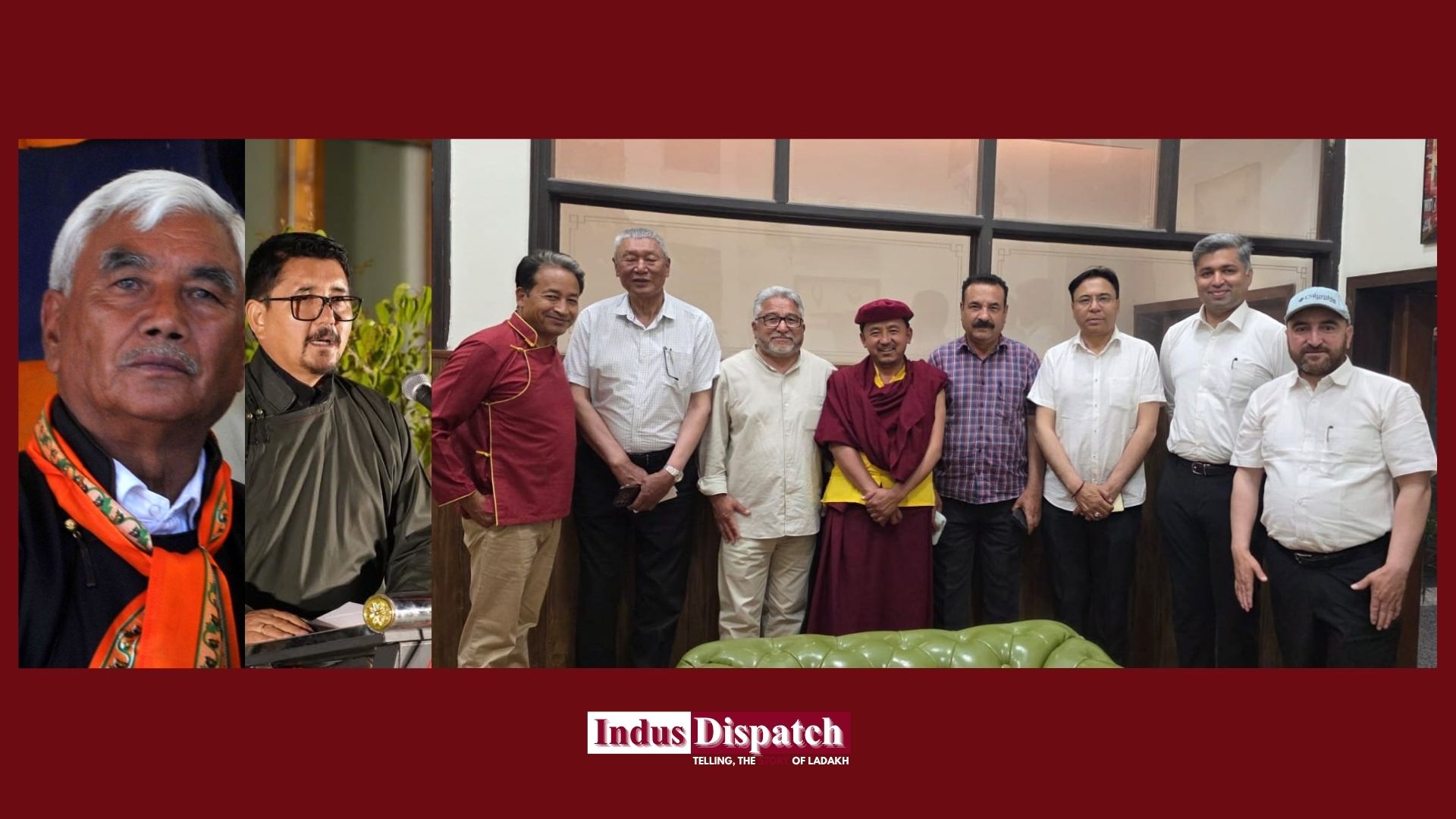
The meeting was attended by LAB representatives Chering Dorjay Lakruk, Sonam Wangchuk and Dorjey Stanzin, while the KDA delegation included Asgar Ali Karbalai, Sajjad Kargili and Ghulam Rasool Nagvi. Ladakh MP Mohammad Haneefa Jan and LAHDC Kargil Chief Executive Councillor Mohammad Jaffer Akhoon were also part of the deliberations.
Sources said the MHA explained that immediate statehood for Ladakh remains difficult due to the Union Territory’s limited revenue base and continued dependence on central assistance for operational expenditure. However, officials reportedly conveyed that a stronger democratic structure now could eventually create conditions for full-fledged statehood in the future.
Climate activist and LAB leader Sonam Wangchuk termed the meeting a “significant step forward” and said the discussions reflected a serious effort to restore democratic governance in Ladakh.
He said the proposed legislative arrangement would have executive, financial and law-making authority while ensuring greater accountability of the administrative machinery to elected representatives.
Former MP Thupstan Chhewang also welcomed the outcome, saying years of dialogue had finally produced movement on key issues that had remained unresolved since Ladakh’s reorganisation.
He noted that while statehood may not be immediately feasible because of financial constraints, the proposed political model would still provide Ladakh with an empowered elected setup capable of taking major governance decisions.
Former Leh Hill Council Chairman and BJP leader Tashi Gyalson praised the Centre’s approach, describing the discussions as positive and solution-oriented.
Gyalson said many of Ladakh’s long-pending concerns had now found direction through continuous engagement between local leadership and the Government of India. He also highlighted the Centre’s focus on balancing Ladakh’s aspirations with national priorities and long-term economic sustainability.
The latest breakthrough comes after years of coordinated campaigns and negotiations led jointly by LAB and KDA, which have consistently pushed for constitutional safeguards, democratic restoration and greater political autonomy for the region.
Since Ladakh was separated from Jammu and Kashmir and made a Union Territory in August 2019, demands for stronger political representation and protection of local identity have dominated public discourse across both Leh and Kargil districts.
Though several legal and constitutional aspects of the proposed arrangement are yet to be finalised, Friday’s discussions are being widely viewed as a decisive step towards a new governance model for Ladakh — one that combines democratic participation, constitutional protection and administrative empowerment within the Union Territory framework.
