

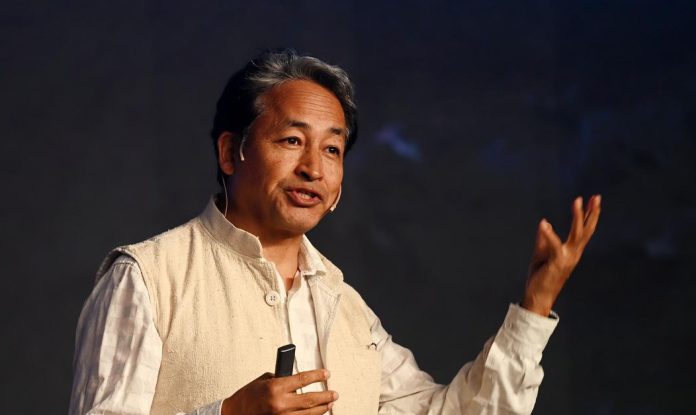
Leh: The Jodhpur Central Jail authorities have informed the Supreme Court that climate activist Sonam Wangchuk, detained under the National Security Act (NSA), is not lodged in solitary confinement and is being provided all rights available to a detenu, including access to visitors and a laptop.
In an affidavit filed before the apex court, the jail superintendent said Wangchuk is in good health, medically sound and physically fit, and has been kept in a standard barrack measuring 20 feet by 20 feet in the general ward of the prison. The affidavit clarified that although Wangchuk is the sole occupant of the barrack, it does not amount to solitary confinement.
“In the interest of clarity, it is specifically stated that the detenu is not in a solitary confinement as he is entitled to all rights available to the detenues,” the affidavit read.
The affidavit was filed in response to a plea by Gitanjali J. Angmo, Wangchuk’s wife, who has challenged his preventive detention under the NSA and sought his immediate release.
According to the submission, the jail authorities have allowed Wangchuk to use a laptop on his request, despite there being no explicit provision for such an allowance in the prison rules. The superintendent said the facility was extended considering the nature of his background and for maintaining mental engagement.
The affidavit also stated that Wangchuk has met his family members and lawyers on multiple occasions since his detention. To comply with Rule 538 of the Rajasthan Prison Rules, 2022, a local police personnel remains present during such meetings, as mandated for NSA detenues.
“Under the rules, detenues under the NSA are not permitted to communicate with their visitors without the presence of a local police official acquainted with the case. This has been ensured in every visitation,” the affidavit said.
The superintendent further maintained that Wangchuk is consuming a normal diet, has shown no signs of chronic illness, and that all his visitation rights have been respected.
Wangchuk was detained on September 26 under the NSA, two days after violent protests demanding statehood and Sixth Schedule status for Ladakh turned deadly, leaving four people dead and around 90 injured. The Union Territory administration accused him of inciting the violence.
The NSA allows preventive detention of individuals whose actions are considered prejudicial to the defence of India for up to 12 months, though the detention can be revoked earlier.
