

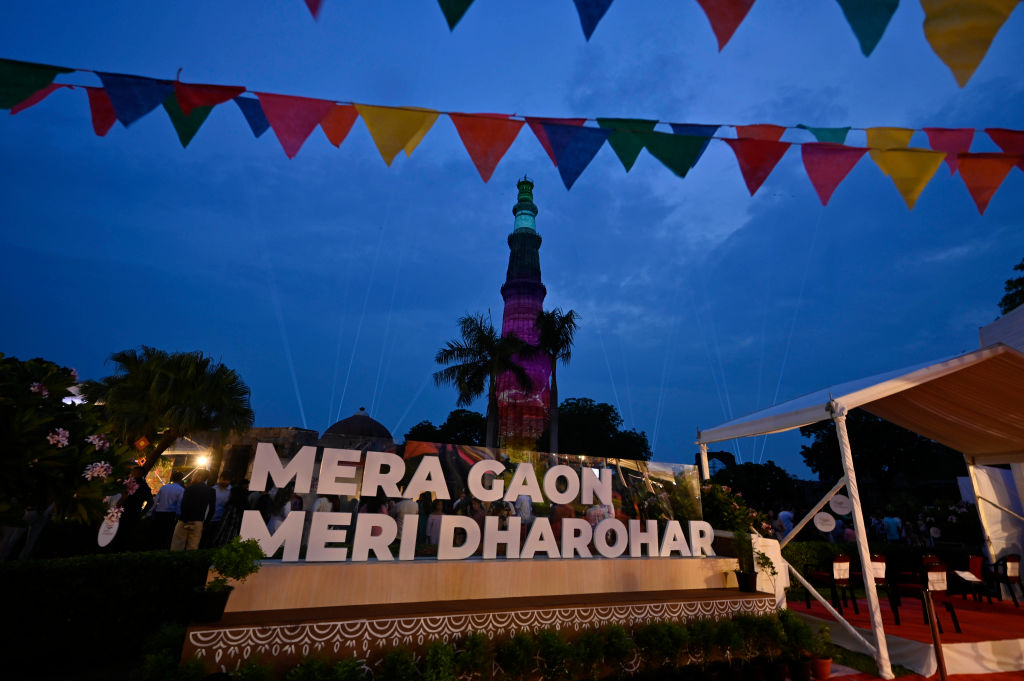
LADAKH: Ladakh has recorded cultural mapping of just 238 villages under the Centre’s flagship National Mission on Cultural Mapping, highlighting the limited coverage of the region’s vast and diverse cultural heritage.
The information was placed before the Lok Sabha on Monday in response to a starred question on the status of the National Cultural Mapping exercise. The Ministry of Culture informed Parliament that the Mera Gaon Meri Dharohar (MGMD) portal, the digital backbone of the mission, has so far mapped 6,23,449 villages across India out of 6,38,365 identified villages. Ladakh’s contribution remains relatively modest within this nationwide exercise.
The MGMD portal documents village-level cultural elements such as heritage sites, folk and traditional art forms, artists, oral traditions, customs, fairs and festivals, traditional attire, cuisine, and local landmarks. However, the ministry acknowledged that the data is maintained strictly in a village-wise format and is not aggregated element-wise, limiting insights into the actual number of artists, cultural sites, or traditional practices documented in Ladakh.
The ministry further clarified that the MGMD portal functions as a centralised national digital platform, allowing public access and offering a ‘Contribute’ feature through which local communities can upload cultural information, subject to validation and moderation.
Despite the scale of the initiative, the government admitted that the National Mission on Cultural Mapping does not provide any financial assistance to states or Union Territories. No grants have been released to Ladakh under the mission, as its scope is confined to documentation and information gathering.
On capacity building, the ministry stated that there is no provision under the mission for training or skill development of artists, a gap that may impact traditional artisans and performers in Ladakh, where many indigenous cultural practices face economic and generational challenges.
The government maintained that the cultural mapping data is intended to support policy planning, development of cultural clusters, and strengthening of heritage tourism circuits in the future.
