

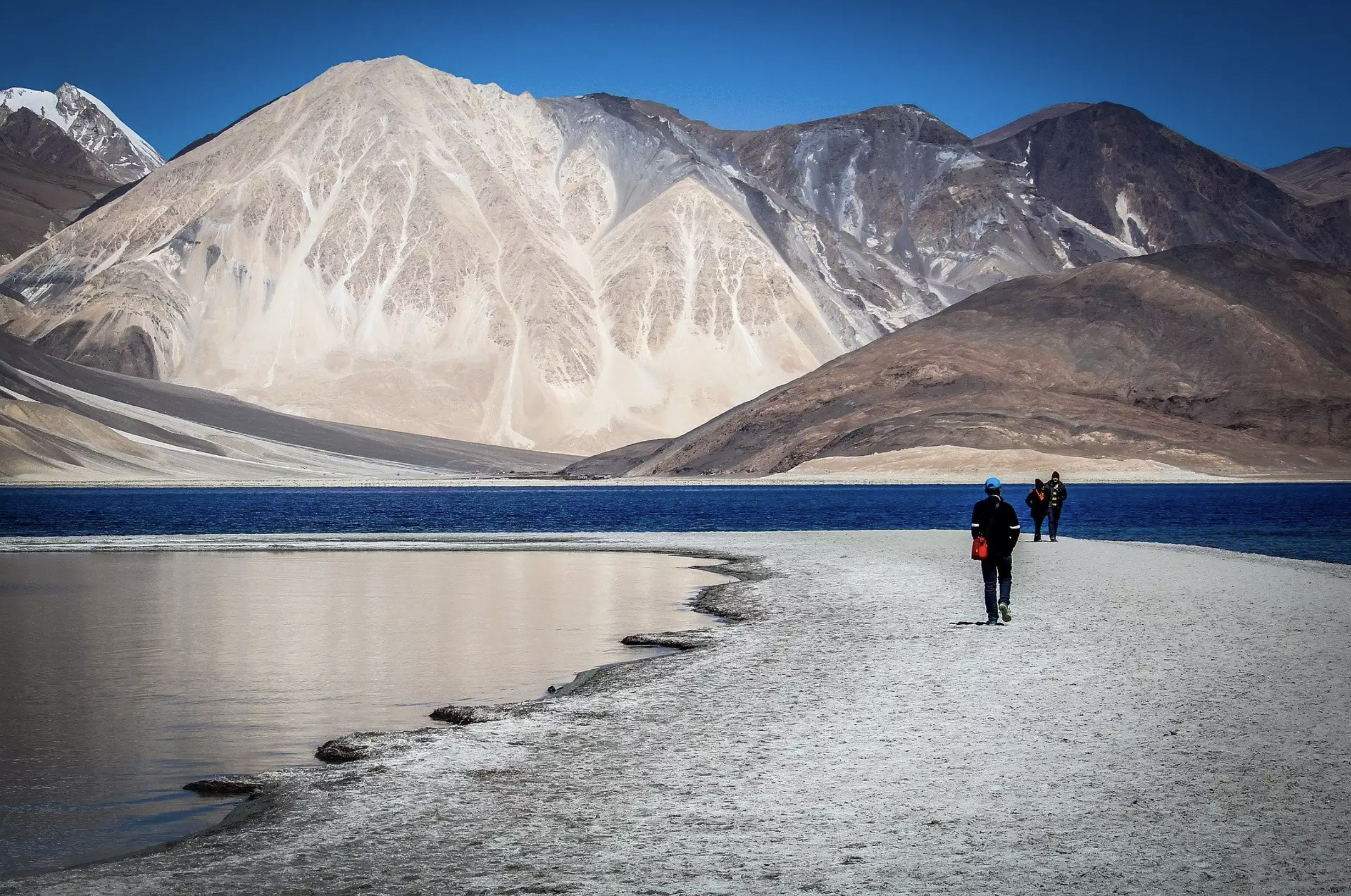
After a lull of two long years courtesy Covid-19 pandemic, the much-awaited annual Ladakh Festival began in the union territory on Wednesday, where a number of events would unfold over the next four days, encapsulating all things Ladakh. With activities like heritage walks, polo matches, cultural performances, traditional archery, food and photo exhibitions, Thangka exhibition, sculpting and film screening, the festival organised by the Department of Tourism and Culture, LAHDC Leh presents itself as a great opportunity to showcase to the entire world the great tourist potential of Ladakh, along with promoting the cold desert as an year-round famous tourist destination.
Underlining the importance of the tourism sector as the backbone of the Ladakh’s economy was the presence of who’s who from the UT, stakeholders of tourism industry, and a huge number of domestic and international tourists along with locals, at the inaugural ceremony of the four-day extravaganza at the historic Polo Ground, Leh.
H.E Drukpa Thuksey Rinpoche was assertive in his address as he spoke about Ladakh’s rich culture and heritage and the need for reviving the age-old traditions in the modern-day world. Calling for making the tourism industry more sustainable and environment friendly, Rinpoche, who was the chief guest on the occasion, requested the visitors from all across the globe to respect the local traditions, culture, and the natural sanctity of the peaceful region of Ladakh as he welcomed them with open arms. He was not shy of flagging the major setbacks from the tourism industry, as he urged locals to take utmost care and learn good things from the visitors.
Highlighting the major positive steps taken by the current government including the opening of border tourism in Siachen, Thang, Rezang-la at Chushul, and Hanle, Advocate Tashi Gyalson, Chairman/CEC, LAHDC Leh called for ensuring that the people living in far-off regions, especially near the borders must get equal benefit from the tourism industry, even as he promised to make tourism accessible to unexplored regions of Ladakh.
Reiterating that Tourism industry is the backbone of Ladakh’s economy which has received further boost after the region was granted the UT status, Jamyang Tsering Namgyal, Member of Parliament from Ladakh called for a cautious approach in ensuring that the expansion of the sector remains sustainable, even as he seconded the CEC in stressing that benefits are equally distributed among all the stakeholders and people involved.
The young leader from BJP made a very interesting remark in his address as he informed that the Ladakh Administration is working on the draft tourism policy, which he hoped would boost tourism in a sustainable manner and would be of great benefit to the locals involved in the industry in the future.
Ladakh: Fascinating Tourism Destination
Ladakh has, for long, remained one of the most fascinating tourist destinations across the globe, pulling visitors from all over the country and the world, alike. And for as much time, while the doors to Ladakh have been open, the road to become a truly global tourism destination is not without barriers, of one or the other kind, which have kept the Ladakh economy from realising its full potential.
No doubt, Tourism is the bedrock of Ladakh’s economy, and with the region getting a full-fledged UT status, it is in a much stronger position today to deal with the sea of opportunities in terms of expansion of tourism and allied sectors, for prosperity, that stand Infront of it, today. Sustainability of the environment and local interests, without doubt, remains a priority. However, sustainability in terms of development, greater profits and better livelihood for locals is equally important, to establish, position and brand Ladakh as the global tourism destination. These two need not contradict each other, and may very well complement each other, as has been seen in different parts of the world.
Poverty is a nationwide problem, Ladakh being no exception, and overcoming poverty is also a universal urge. In places like Ladakh, tourism provides the most natural way to a sustainable economy. Kashmir’s economy, for example, despite prolonged conflict including curfews and shutdowns has thrived mainly on tourism.
Ladakh, for its countless beautiful and adventurous locations, can certainly do much better than Kashmir. The region has been blessed by Mother Nature, and coupled with the fascination and intrigue built and preserved around it, Ladakh holds the potential to become one of the greatest tourism destinations of the world.
One thing has to be remembered that tourism cannot thrive in isolation. There are some best tourism practices integrated nationally and internationally. By keeping such practices and resources away, Ladakh will always struggle with limited capacities.
Ladakh’s Concerns & The Way Forward
Ladakh’s concerns of external influence over the locals are well founded but there are a number of ways to protect the local concerns. Alliances and value based partnerships could be some of the examples. Kashmir has always had more such concerns than Ladakh. Take the example of Kashmiri hoteliers. The local owners of hotels have tied up with major national and international brands such as Taj, Radisson, Portico etc to bring the quality service to national level. So while the tens of thousands of tourists who visit Kashmir pay for the quality services benchmarked at national level, the money they shell out goes to local Kashmiris, which the ‘outsiders’ operate the hotels for locals.
While tourism has brought cash flow to Ladakh, it has also affected an economic divide among its residents. Most of the economic benefits of tourism goes to a small group of people, centered around Leh, and very little of the gains reaches to more than 90% of Ladakhis who live outside of this area. This is the reason, MP Namgyal and CEC Gyalson, were both vocal in their demand for equal distribution of benefits among all the stakeholders and people involved.
As the Administration works on the draft tourism policy for Ladakh- a strategically important region- it will do good to pay great attention to how it would want the Tourism Sector to not only sustain but thrive. Not only it has to protect locals’ interests, but also ensure that they are not deprived of the great scope of growth, which will come along with the development, ensured by alliances and value-based partnerships with those outside the UT.
A social listening across different platforms suggest that the tourism stakeholders in Leh want an exclusive policy, barring external stakeholders from participation. While protection of the interests of Ladakh has to be a supreme concern of everyone, at the same time the stakeholders must also exercise a broad vision to enhance opportunities of economic development and capacity building. Barring alliances and partnerships with the industry leaders of Tourism may limit Ladakh’s economic potential.
