

-
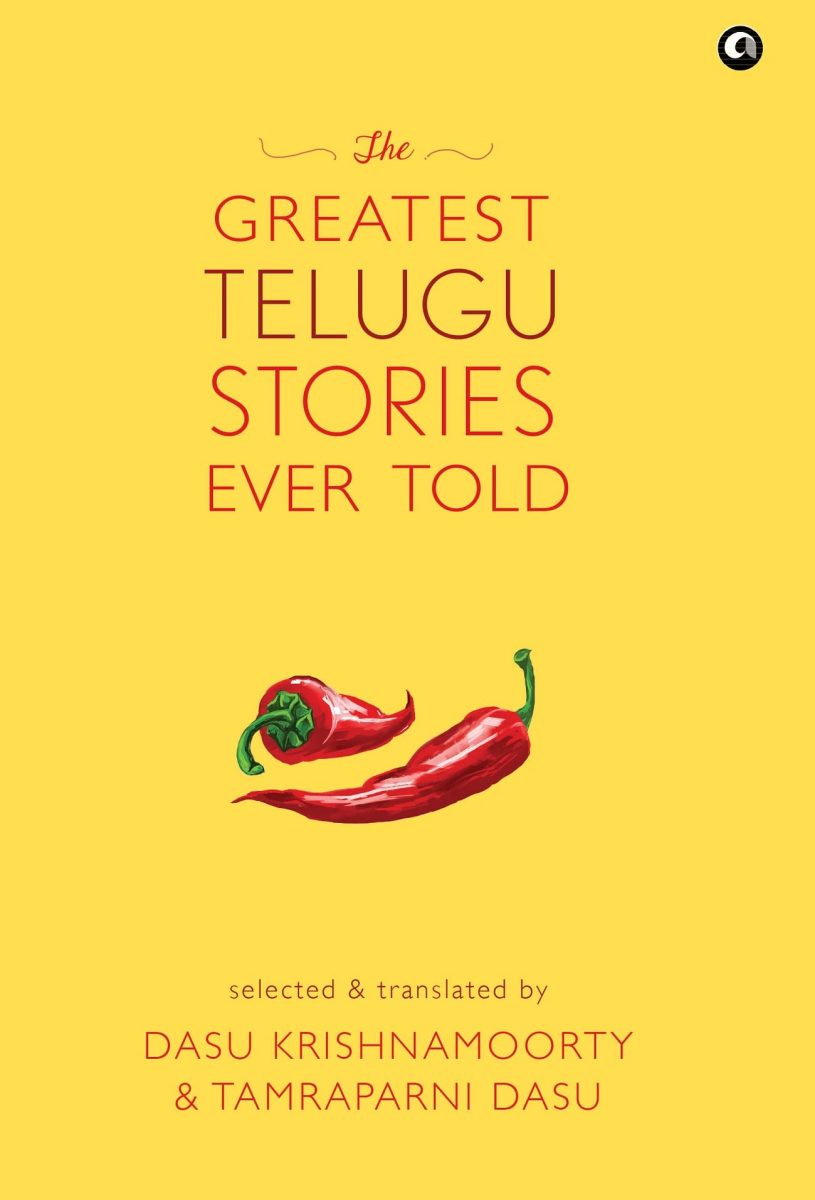
The book “The Greatest Telugu Stories Ever Told” has been selected and translated by Dasu Krishnamoorty and Tamraparni Dasu.
-
The book spans almost a century of work by some of the finest writers of short fiction in the language.
-
The tales found in this collection weave a rich tapestry of Telugu experiences. The storytellers included in the anthology range from literary masters such as Chalam, Kanuparthi Varalakshmamma, and Kodavatiganti Kutumba Rao to contemporary writers like Mohammed Khadeer Babu, Jajula Gowri, and Vempalle Shareef.
-
Read an excerpt from the book below.
Editor’s Note: The following excerpt has been taken from the book’s introduction.
****
In a country like India, with its mind-blowing demographic diversity, the short story embraces the voice of its people, no matter what language they speak. It touches on the lives of different individuals, with their varied aspirations and problems and ways of solving them, highlighting the essentiality of contrast and diversity. After India’s independence, new voices, hitherto unheard, emerged.
For more than half a century, writers from communities that were left behind have been narrating the story of their social condition and conflict through prose and verse. This process of self-discovery and articulation acquired pace and focus not long ago, facilitated largely by a proliferation of magazines that gave alternative literature its legitimate space. This anthology is concerned with the story of how Telugu-speaking subcultural groups carved a vibrant voice for themselves in the literature of that language, thus contributing to the cultural wealth of the country.
Our writers come from all sections of the Telugu community, irrespective of their denominational category. Despite the demographic and geographic heterogeneity of the Telugu region, a common thread of change runs through their stories. Chalam was a feminist seer of his time while Boya Jangaiah espoused—as Jajula Gowri does today—the Dalit identity, and brought the voice of subaltern groups that contribute to the cultural and economic advancement of the country to the forefront. Syed Saleem, Vempalle Shareef, Khadeer Babu, Baa Rahamathulla, and Dada Hayat are prominent stars in the galaxy of Telugu Muslim writers coming from a community known for its excellence in literature, music, and other fine arts. Powerful women writers of the past—Kanuparthi Varalakshmamma, Illindala Saraswati Devi, Turaga Janaki Rani, and Achanta Sarada Devi—are a big part of the storytelling arc that begins in the nineteenth century and sweeps into the twenty-first. Dark undercurrents of political and social commentary propel the stories of Madhurantakam Rajaram, Bandi Narayanaswami, and Palagiri Viswaprasad, while Kodavatiganti Kutumba Rao, Kavana Sarma, Vempalli Gangadhar, Addepalli Prabhu, and young Chaduvula Babu captivate us with stories about the ‘great human drama’.
It is impossible to select a handful of stories from the overwhelming ocean of creative talent that is the Telugu literary world. This is our imperfect attempt at providing a sliver of a cross-section of some of the best writing to have emerged over the last several decades. We need to caution the reader that the translations are no match for the original. Though all the stories in this collection were originally written in Telugu, as a result of the vastness of the region the speakers of this language inhabit, Telugu is home to several overlapping subcultures with different spoken forms of the language. There are dialects that don’t lend themselves easily to translation, like Vempalli Gangadhar’s ‘Festival of Love’, a lyrical love story imbued with the fragrance of jasmine fields.
If the reader senses black and white overtones in several of the stories, it is an inevitable consequence of the economic and political realities that shape the lives of the resourceless millions inhabiting our urban ghettos and rural hinterlands. Poverty drives people to innovate ways of overcoming it that are not always ethical. But ethics offer no solution to the compulsions thrust upon the dispossessed. ‘The Predators’ by Syed Saleem, set in the Vijayawada region of Andhra Pradesh in the 1940s, highlights the perversions of innovation when two miserable souls vie with each other as they rob unclaimed cadavers of their gold and valuables.
Vempalle Shareef’s ‘The Curtain’ is reformist in character and seeks to cleanse Muslim society of its gender bias. Shareef has chosen, an old woman as his protagonist to personify the struggle against the system of purdah, portraying it as a male invention.
Death occurs in everyone’s life and the crushing grief it leaves behind is often accompanied by gut-twisting memories of the loss and the knowledge of its irrevocability. Khadeer Babu in ‘A Mother’s Debt’ and Rahamathulla in ‘Adieu, Ba’ portray the emotional toll of loss—profoundly purgatory in its impact—and the press of catharsis that descends on the survivors of bereavement with a glimpse into the last rites that follow.
While some of the stories in this anthology might seem dystopian, they spring from necessary truths that society at large must face and remedy. To lighten the mood, Dada Hayat’s charming, sun-drenched narrative ‘The Truant’ gets into the mercurial mind of a wilful child whose fantasy of skipping school devolves into boredom once it is realized. In a similarly humorous vein, Kavana Sarma’s ‘House Number’ gently mocks a self-proclaimed math genius and his convoluted attempts at memorizing and recalling a simple house number.
Several stories, written decades apart, emphasize the resilience of the primal kinship between human beings. In ‘Bad Times’, writing about the travails of transition during the Partition, Illindala Saraswati Devi discusses the downturn in Muslim fortunes after the integration of the Nizam’s state with the Indian Union. The story narrates the falling apart of a noble’s family and his daughter’s marriage of convenience to one of his Hindu servants. Chaduvula Babu’s ‘Eye-opener’ cautions the reader about hasty conclusions made based on appearances. A young rake pleasantly turns out to be a Good Samaritan creating a safe haven for the elderly, much to the shock of an old man who mistook him for a feckless playboy. In Addepalli Prabhu’s broodingly atmospheric ‘An Ideal Man’, set against a hurricane-whipped Godavari River, a city man is stranded at the breached banks of the river. A poor hut-dweller nearby offers him shelter and food for the night and teaches him what it means to be a human being in the process.
The early attention the state had paid to Dalit literary voices helped douse the flames of unrest in the region by offering writers from the community constitutional guarantees and protection through the law of the land. This is how literature can and, in fact, did mediate between the state and a community to undo social disparities. The Dalit world continues to experience the excitement of arrival and of surviving a history of denial. Boya Jangaiah writes with the brevity of Raymond Carver and the beat of a poet. It is hard to capture the music of his language in English. In his ‘The Eclipse’, BoJa, as Boya Jangaiah is fondly known, writes of the aching memories that besiege a Dalit poet when he makes a brief stop at his village on his way to court to face charges of sedition. The poet’s mind goes back to the days of humiliation and deprivation his parents had suffered when he was a child, a time when upper caste men laid down the law and administered it harshly to keep the Dalits in line. The Rayalaseema legend Madhurantakam Rajaram uses an unusual narrative style in ‘Exiled’, his artistically crafted soliloquy of a Dalit man addressing Mahatma Gandhi, and casts light on how the upper castes demolished democratic structures to usurp power from elected Dalit grassroots administrators, disenfranchising them.
