

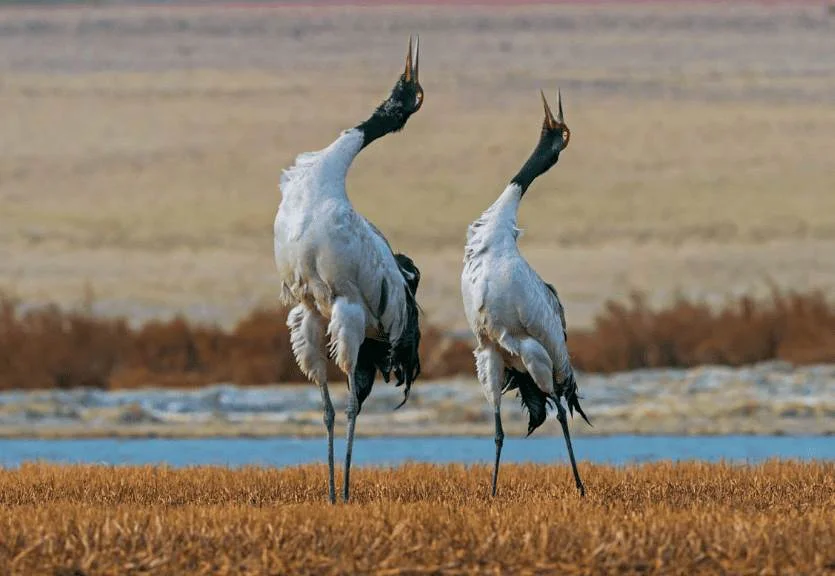
Leh: More than 2,950 free-ranging dogs (FRDs) have been sterilised in Ladakh as part of a conservation effort to protect the region’s Black-necked Cranes (BNCs), whose breeding grounds are increasingly facing pressure from stray dog populations, habitat disturbance and growing human activity.
The initiative, led by the Bombay Natural History Society (BNHS) in collaboration with the Indian Army, Animal Husbandry Department and Department of Forest, Ecology & Environment, has been underway since 2022 in areas frequented by the endangered alpine bird.
Free-ranging dogs have been reported to prey on BNC eggs and chicks and disturb nesting birds, affecting their breeding success.
Their growing numbers are also linked to the easy availability of food waste from settlements, tourist establishments and institutional facilities.
Alongside sterilisation, efforts are being made to reduce these food sources. BNHS has initiated a pilot waste-management programme at selected Indian Army outposts to improve the disposal of kitchen and food waste and limit access to food that supports growing dog populations.
The conservation programme has also focused on building local capacity. Around 1,000 armed forces personnel have been trained in biodiversity conservation and wildlife management to strengthen protection efforts in Ladakh’s ecologically sensitive landscapes.
The Black-necked Crane holds particular ecological and cultural importance in Ladakh. Declared the Union Territory’s state bird, the species is regarded locally as a symbol of peace and is deeply associated with the Buddhist culture of the region.
Ladakh is the only breeding habitat of the Black-necked Crane in India, with major breeding areas located around the wetlands of Hanle, Tso Kar, Nyoma and other parts of Changthang. The species is also found across China, Bhutan and Nepal.
BNHS has been monitoring the crane’s breeding population in Ladakh. During its annual survey conducted in June 2026, 19 breeding pairs were recorded across the wetlands of the region. BNHS scientist Muhammad Raza said the figure could be slightly higher as several sites could not be surveyed due to logistical and accessibility challenges.
The conservation concerns come amid growing pressure on Ladakh’s high-altitude wetlands from expanding settlements, infrastructure development, tourism, habitat degradation and climate change.
The issue gained further attention with the inauguration of the first-ever Black-Necked Crane Festival in Ladakh by Lieutenant Governor Vinai Kumar Saxena.
The festival brought together conservationists, researchers and experts from India and abroad, including representatives from Bhutan, Nepal and the United Nations.
Addressing the event, Saxena stressed that protecting the Black-necked Crane also means protecting Ladakh’s wetlands, grasslands and high-altitude ecosystems that support biodiversity as well as pastoral communities.
He called for local residents to be treated as partners and custodians of conservation, while combining traditional knowledge with modern scientific methods.
“The Black-Necked Crane is much more than a bird. It is a symbol of peace, an ambassador of our high-altitude ecosystem and a bridge between wildlife conservation and the well-being of our communities,” the Lieutenant Governor said.
The festival also highlighted the potential of responsible birdwatching, wildlife photography, nature tourism, handicrafts and traditional products to generate sustainable livelihoods while supporting conservation.
Several knowledge products were released during the event, including books on the Black-necked Crane in India and Bhutan, a coffee table book, a conservation action plan, a status and distribution report, a bird economy status report and the Ladakh Declaration for Black-necked Crane conservation.
The combined focus on dog population control, waste management, community participation and responsible tourism is aimed at reducing pressure on the breeding habitats and securing a more sustainable future for one of Ladakh’s most iconic species.
