

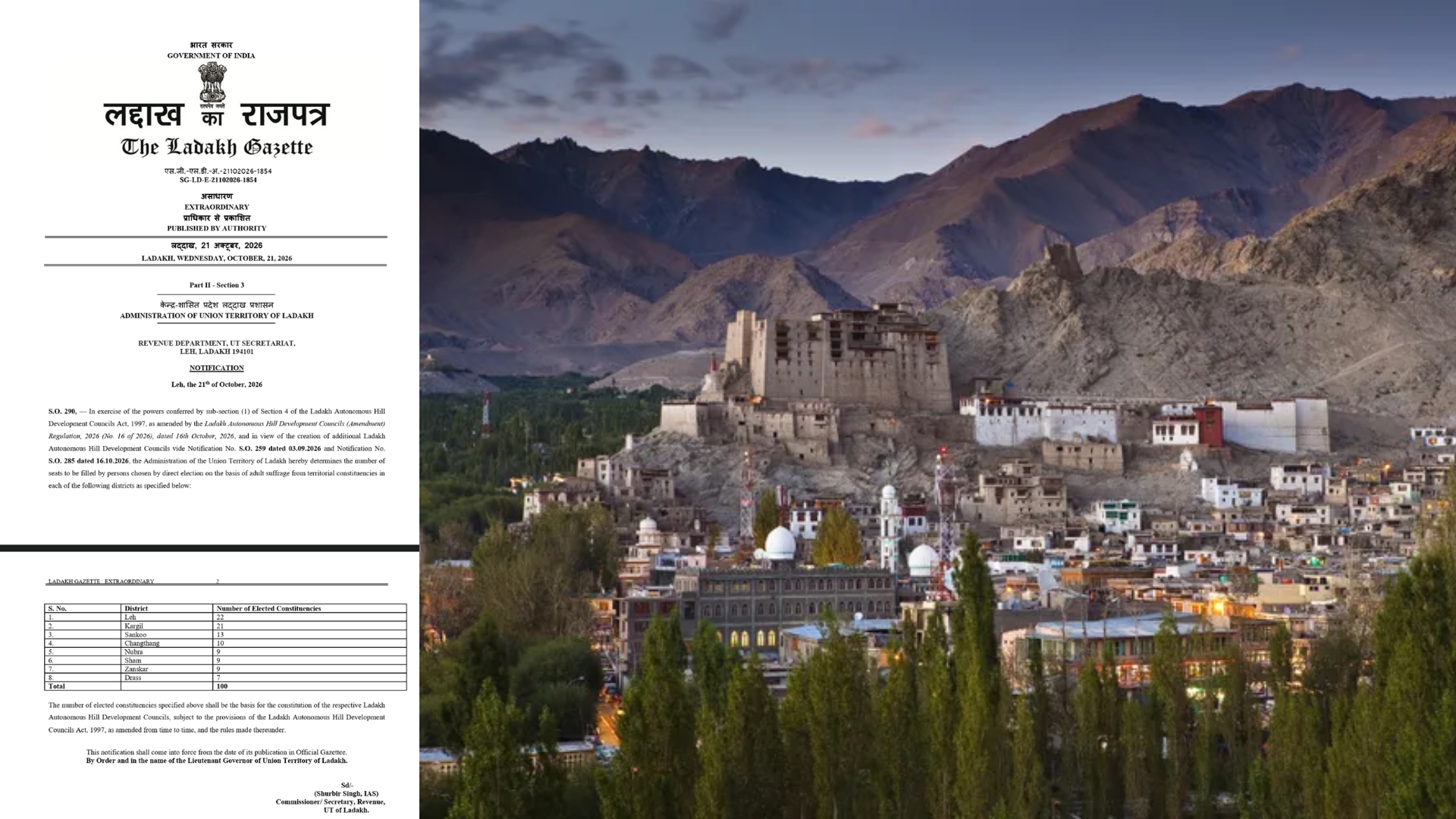
Leh, October 21: The Ladakh Administration has notified a total of 100 elected constituencies across eight districts for the constitution of the Union Territory’s Ladakh Autonomous Hill Development Councils (LAHDCs), formalising the electoral framework following the creation of additional councils.
The Revenue Department issued the notification on Wednesday under Section 4(1) of the Ladakh Autonomous Hill Development Councils Act, 1997, as amended by the Ladakh Autonomous Hill Development Councils (Amendment) Regulation, 2026. The notification, published in an extraordinary issue of the Ladakh Gazette, takes effect from the date of its publication.
According to the notification, Leh will have the highest number of elected constituencies at 22, followed by Kargil with 21. The newly constituted Sankoo council has been allocated 13 constituencies, while Changthang will have 10.
Nubra, Sham and Zanskar will each have nine elected constituencies, while Drass will have seven, taking the total to 100 across the eight districts.
The allocation has been made in accordance with the provisions of the 1997 Act, as amended, and follows the creation of additional LAHDCs through two earlier notifications issued on September 3 and October 16, 2026.
The latest order determines the number of seats to be filled through direct elections from territorial constituencies on the basis of adult suffrage. It also provides the basis for constituting the respective Hill Development Councils, subject to the provisions of the Act and the rules framed under it.
The notification was issued by the Ladakh Administration in the name of Lieutenant Governor Vinai Kumar Saxena and signed by Shurbir Singh, Commissioner/Secretary, Revenue Department.
The allocation marks a significant administrative step in operationalising the expanded structure of grassroots governance in Ladakh. The creation of additional councils is intended to establish district-level institutional arrangements across a wider geographical area of the Union Territory.
With the notification now in force, the number of elected constituencies for each of the eight councils has been formally specified. However, the order itself does not announce an election schedule or specify when elections to the councils will be held.
The LAHDC system provides an elected institutional mechanism for local governance and development in Ladakh. The latest notification establishes the constituency numbers that will form the basis of the respective councils under the amended legal framework.
