Close Menu
Indus Dispatch
  • Home
  • Top Stories
  • Editorial
  • Ladakh Stories
  • Essential Ladakh
  • Forgotten Geography
What's Hot

LG  Saxena Announces 275% Hike in Artisan Trainee Stipend, Nearly 1,000 Youth to Benefit

September 7, 2026

Kargil Tops Men, Leh Dominates Women as UT-Level Athletics Meet Concludes

September 7, 2026

Culture, Youth Power Take Centre Stage as Two-Day Drass Festival Ends on a High Note

September 7, 2026
Facebook X (Twitter) Instagram
Indus Dispatch
Monday, September 7
Facebook X (Twitter) Instagram YouTube
  • Home
  • Top Stories

    LG  Saxena Announces 275% Hike in Artisan Trainee Stipend, Nearly 1,000 Youth to Benefit

    September 7, 2026

    Ladakh Showcases Horticulture Potential as 250+ Farmers Join Grand Kisan Mela in Leh

    September 7, 2026

    Tawang and Joshimath: India and China Build New Guardrails on a Contested Border

    September 3, 2026

    LG Saxena Approves 7 LAHDCs, Paving Way for Local Elections

    September 3, 2026

    LG Saxena pushes Hunderman as Ladakh’s next border tourism hotspot

    September 3, 2026
  • Editorial

    The General Who Commanded Doklam and Galwan, Now Erased

    September 3, 2026

    Ladakh at a Turning Point: From Administrative Reform to Democratic Renewal

    August 20, 2026

    Ladakh’s Democratic Transformation: A Hill Council for Every District

    July 13, 2026

    Kucha: India’s Civilisational Bridge Across the Taklamakan

    June 20, 2026

    Agni Desa and India’s Old Road to Central Asia

    June 12, 2026
  • Ladakh Stories

    Kargil Tops Men, Leh Dominates Women as UT-Level Athletics Meet Concludes

    September 7, 2026

    Culture, Youth Power Take Centre Stage as Two-Day Drass Festival Ends on a High Note

    September 7, 2026

    Culture, Youth Power Take Centre Stage as Two-Day Drass Festival Ends on a High Note

    September 7, 2026

    DSHO Reviews Sheep Husbandry Services Across Nyoma, Engages Nomadic Herders on Ground Issues

    September 7, 2026

    25 Years of Seva Sankalp Abhiyan Celebrated in Leh

    September 4, 2026
  • Essential Ladakh

    Alchi Monastery: A Treasure of Ancient Art in Ladakh

    April 4, 2026

    Lamayuru Monastery: Exploring the Moonland of Ladakh

    April 4, 2026

    Diskit Monastery: Spiritual Majesty Amidst Nubra’s Sand Dunes

    April 4, 2026

    Hemis Monastery: The Grand Heart of Ladakhi Culture

    April 4, 2026

    Thiksey Monastery: Ladakh’s Mini Potala with Spiritual Grandeur

    April 4, 2026
  • Forgotten Geography
Indus Dispatch
Home»Ladakh Stories»Leh Forest Division Trains Frontline Staff to Green Ladakh’s Cold Desert
Ladakh Stories

Leh Forest Division Trains Frontline Staff to Green Ladakh’s Cold Desert

The Dispatch StaffBy The Dispatch StaffJune 18, 2026No Comments3 Mins Read
Facebook Twitter Pinterest LinkedIn Tumblr Email
Share
Facebook Twitter LinkedIn Pinterest Email

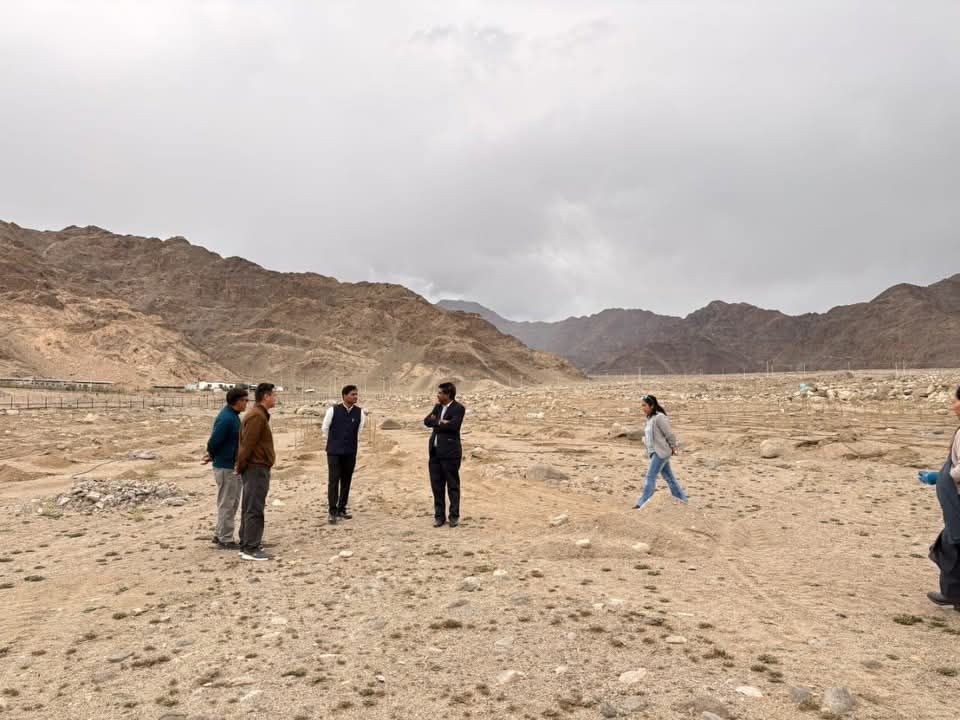
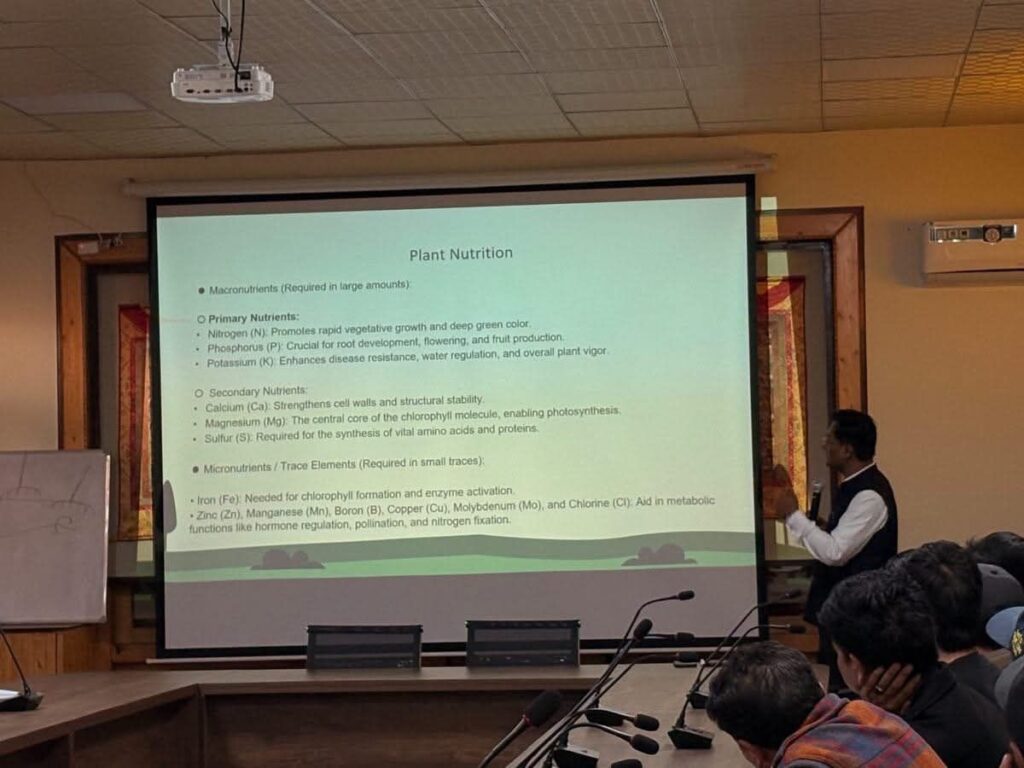
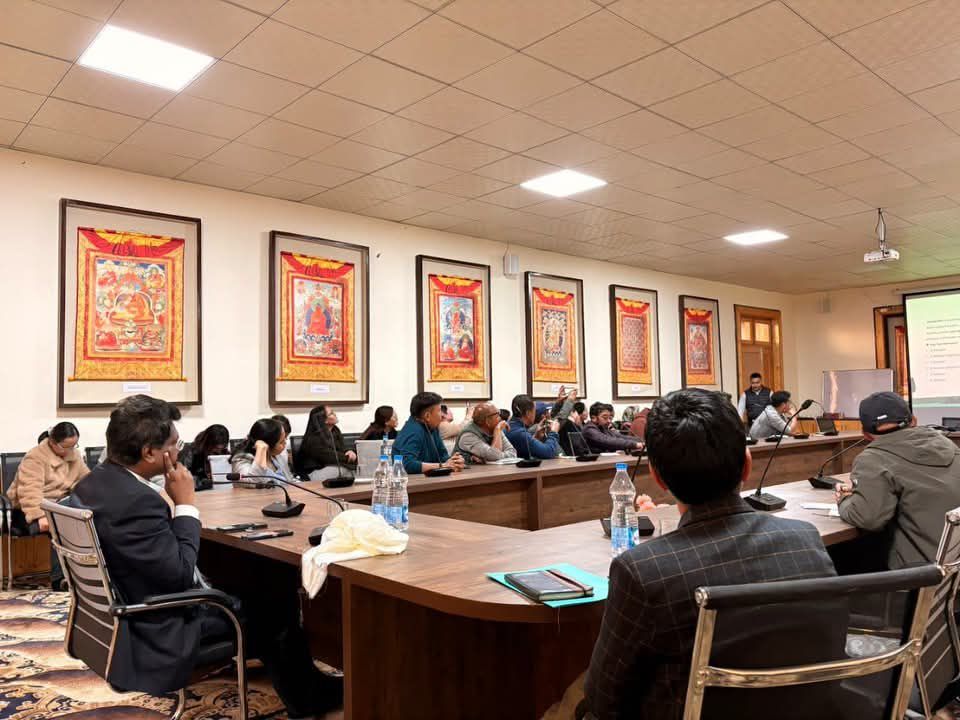
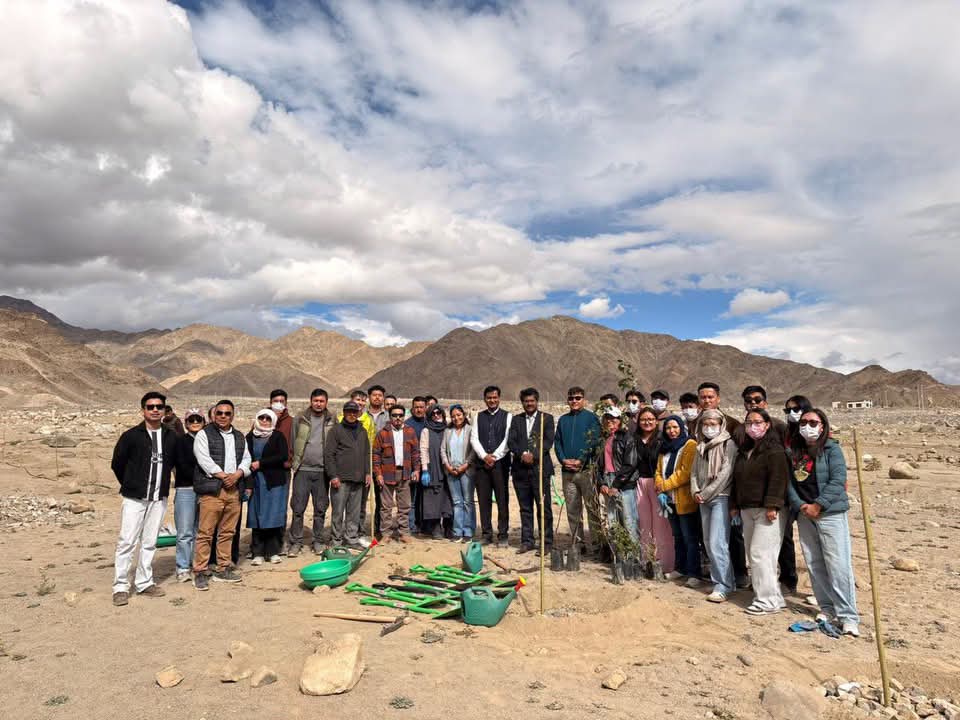
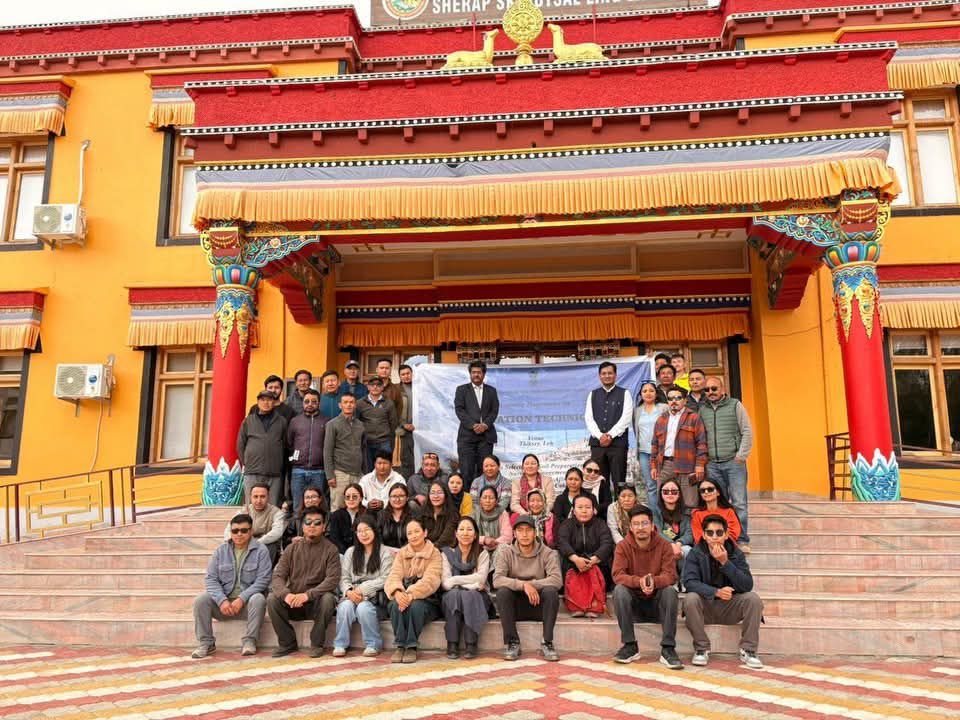
Leh, June 18: In a significant step towards strengthening ecological restoration and expanding green cover in Ladakh’s fragile cold desert ecosystem, the Leh Forest Division on Thursday conducted a comprehensive Theory-Cum-Field Training Programme on Forestry Plantation Techniques for its frontline field staff.
The training programme was conducted by Shri Amarjeet Kujur, IFS, Deputy Conservator of Forests (DCF), Leh Forest Division, and chaired by Shri Rajesh S., IFS, Additional Principal Chief Conservator of Forests (Addl PCCF) and Chief Wildlife Warden, UT Ladakh.
Addressing the inaugural session, Rajesh S. emphasized the need for skill enhancement in cold desert plantation techniques to achieve better outcomes in ecological restoration, community forestry, agroforestry promotion, and food forest development across Ladakh.
The programme focused on equipping forest guards, block officers, and other frontline personnel with scientific and practical techniques tailored to Ladakh’s extreme climatic conditions. Combining classroom sessions with intensive field demonstrations, the training aimed to improve sapling survival rates while ensuring efficient use of scarce water resources.
The training was structured around five key modules designed to address the unique challenges of high-altitude afforestation.
Under the Climate-Resilient Species Selection module, participants studied the performance of native and adaptable species such as willow, poplar, apple, apricot, and Juniperus polycarpos (Shukpa), balancing ecological restoration with local community needs.
The Advanced Plantation Techniques session introduced methods such as micro-catchments and specialized trenches capable of trapping snow, reducing wind impact, and maximizing moisture retention in arid landscapes.
Recognizing the challenges posed by Ladakh’s sandy and nutrient-deficient soils, the Soil Structure and Nutrient Improvement module demonstrated the use of organic compost, natural soil binders, and moisture-retaining additives to create a healthier root environment for saplings.
The Arid-Zone Irrigation Engineering component focused on efficient water management practices, including deep-root watering systems, subsurface moisture conservation techniques, and plantation designs aimed at minimizing evaporation losses caused by intense ultraviolet radiation at high altitudes.
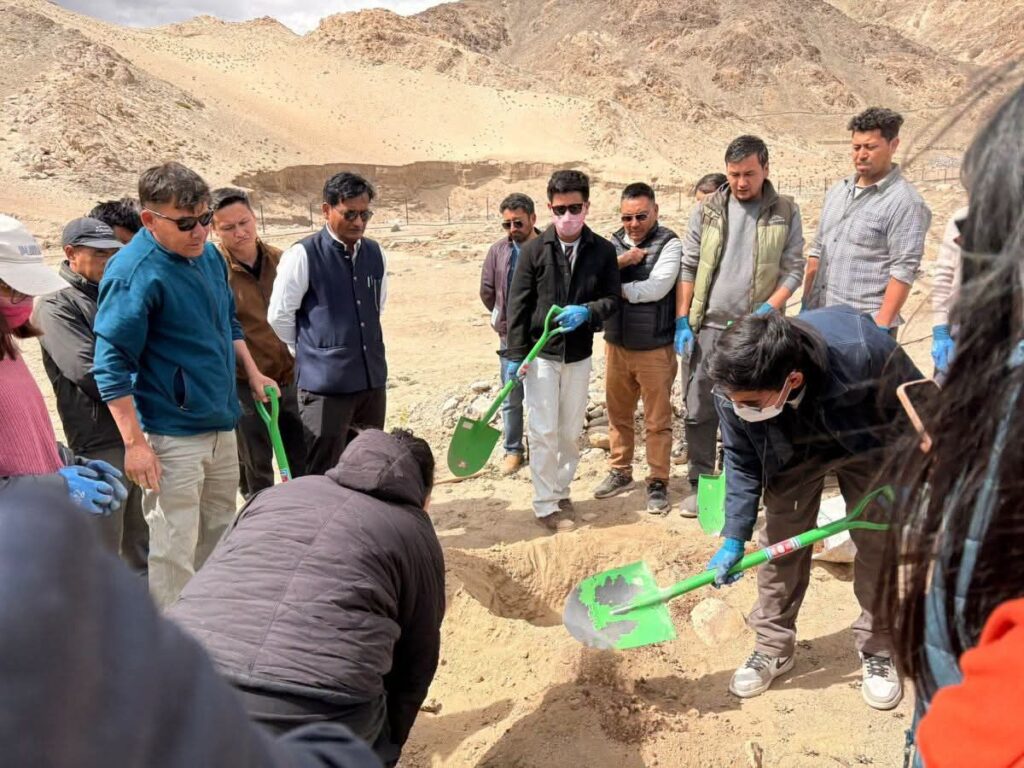
The programme concluded with a hands-on field workshop, where participants prepared plantation beds, mixed soil amendments, and practiced precision planting and root-handling techniques on live saplings.
Speaking during the concluding session, DCF Amarjeet Kujur stressed that successful greening in a cold desert environment requires a shift from conventional forestry methods.
“Every sapling planted in Ladakh faces severe climatic stress. Through scientific moisture conservation and targeted soil improvement, our focus is shifting from merely increasing plantation numbers to ensuring long-term survival and ecological sustainability,” he said.
Officials said the standardized techniques learned during the training will now be implemented across upcoming afforestation programmes under major initiatives including the Indus River Green Corridor Initiative, Ladakh Trans-Himalayan Cold Desert Urban Forestry and Food Forest Initiative, and various community woodlot projects being undertaken by the Department of Forest, Ecology and Environment, UT Ladakh.
The Leh Forest Division also acknowledged the support of Thiksey Gonpa for facilitating the training programme and actively participating in local greening initiatives.
Share. Facebook Twitter Pinterest LinkedIn Tumblr Email
The Dispatch Staff

Related Posts

Kargil Tops Men, Leh Dominates Women as UT-Level Athletics Meet Concludes

September 7, 2026

Culture, Youth Power Take Centre Stage as Two-Day Drass Festival Ends on a High Note

September 7, 2026

Culture, Youth Power Take Centre Stage as Two-Day Drass Festival Ends on a High Note

September 7, 2026
Leave A Reply Cancel Reply

Top Posts

Chief Secretary confirms May 22 MHA talks with KDA, LAB to proceed as scheduled

May 20, 20262,416 Views

Anand Jain posted as DGP Ladakh

June 22, 20261,181 Views

Ex-LBA president writes to HM Shah, flags imbalance in Ladakh dialogue representation

November 10, 20251,068 Views

Thupstan Chhewang steps down as Leh Apex Body chairman; members accept resignation

May 4, 20261,037 Views
Stay In Touch
  • Facebook
  • Twitter
  • Instagram
  • YouTube
Facebook X (Twitter) Instagram YouTube
© 2026 Indus Dispatch. All Rights Reserved. | Powered by Ideogram Technology Solutions [P] Ltd..

Type above and press Enter to search. Press Esc to cancel.