

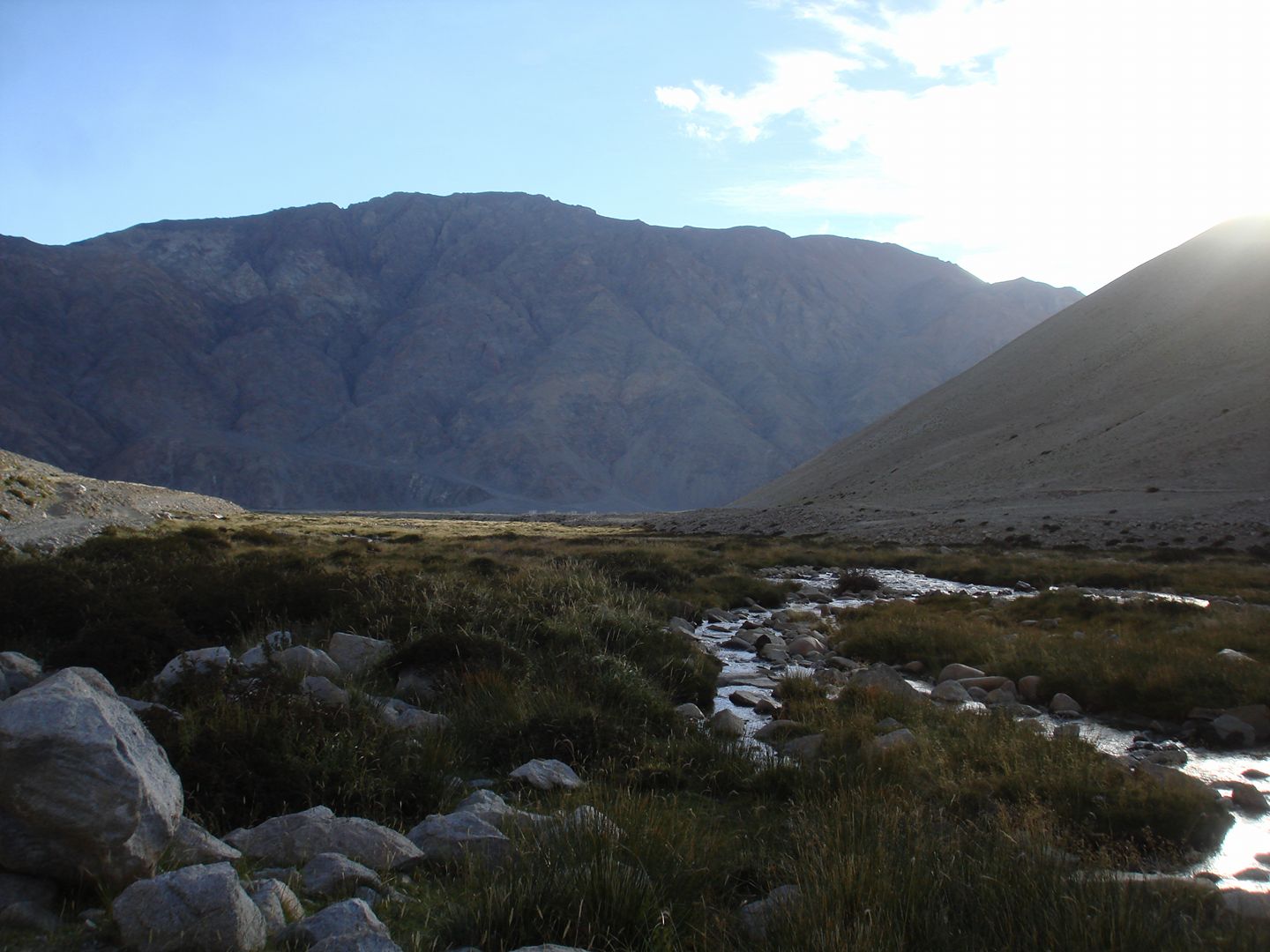
In the far southeastern reaches of Ladakh, near the frontier village of Demchok, lies Charding Nullah, a seemingly modest mountain stream that has acquired significance far beyond its size. Set amid a stark high-altitude landscape of bare mountains, narrow valleys and cold desert terrain, Charding Nullah today stands at the intersection of geography, history, identity and national security. For Ladakh, it is part of a frontier landscape that has for generations defined habitation, movement and survival in one of the harshest inhabited regions of the world. For India, it has become one of the most closely watched points along the Line of Actual Control in eastern Ladakh, symbolising both the vulnerability and the strategic importance of remote border areas.
Geographically, Charding Nullah is associated with the Demchok sector, an area located along the Indus basin in eastern Ladakh. Demchok itself sits in a historically important corridor connected to the larger trans-Himalayan world, where valleys and watercourses have always determined routes of habitation and movement. In such an extreme landscape, a nala or stream is never merely a physical feature; it shapes access, influences local patterns of settlement and, in frontier zones, often becomes a reference point in military and cartographic discussions. The Charding-Ninglung Nala area, because of its location close to disputed perceptions of the frontier, has over time moved from being a remote geographic feature to a nationally significant strategic point.
The historical importance of the Charding Nullah region emerges from Demchok’s larger place in Ladakh’s frontier history. For centuries, Ladakh was not an isolated mountain space but a civilisational bridge between the Indian subcontinent, Tibet and Central Asia. Border villages such as Demchok were part of wider cultural and commercial circuits in which geography dictated human contact. Though modern geopolitics has transformed these spaces into hardened frontiers, their older significance survives in memory and in the lived experience of Ladakhi communities who have long inhabited these difficult terrains. Charding Nullah must therefore be understood not only through the lens of contemporary tensions but also as part of Ladakh’s historic borderland character, where land, water, passes and valleys connected people long before they divided states.
In recent years, Charding Nullah has gained prominence because of tensions between India and China in eastern Ladakh. The Demchok sector, including the Charding Nullah area, has figured among the friction points discussed during military and diplomatic engagements following the wider standoff that began in 2020. Reports over the past several years have noted differing claims in the area, temporary structures and patrol-related tensions, making Charding Nullah one of the names most frequently mentioned in discussions on restoring stability along the frontier. The October 2024 understanding on patrolling and disengagement in Demchok gave the area even greater visibility, highlighting that remote Ladakhi locations are central to national strategy and not peripheral to it.
For Ladakh, the significance of Charding Nullah is deeper than military cartography. It reflects the reality that frontier communities live at the front line of geopolitics. When a place like Demchok enters the national spotlight, it is also a reminder that Ladakh’s border villages are not empty strategic spaces but inhabited regions with local aspirations, historical memory and emotional importance. The people of Ladakh have long served as the human anchor of India’s presence in the Himalayas, and the visibility of places such as Charding Nullah reinforces the case for stronger infrastructure, connectivity, livelihood support and sustained civilian attention to remote border belts.
In the Indian context, Charding Nullah represents the larger strategic lesson of the Himalayan frontier: that geography and sovereignty are inseparable. Tiny streams, ridgelines, grazing grounds and narrow valleys can carry enormous importance when they lie in contested high-altitude terrain. What may look insignificant on a small-scale map can become critical in military planning, border management and diplomatic negotiation. Charding Nullah is therefore not just a local Ladakhi landmark; it is part of the vocabulary through which India now understands the western sector of the boundary with China. Its importance lies in location, in terrain, in access and in the message it sends about India’s determination to maintain its presence in every part of Ladakh.
There is also an emerging symbolic dimension to the area. With Demchok among the Ladakh locations being opened to civilian visitors under battlefield tourism, the region is increasingly being seen not only as a sensitive frontier but also as a site of national memory and public awareness. This shift is important because it brings remote geography into the mainstream imagination of the country. It allows citizens to recognise that Ladakh’s border landscapes are not distant abstractions but living spaces tied to sacrifice, vigilance and national resolve. In that sense, Charding Nullah is gradually becoming part of a wider public understanding of Ladakh’s role in India’s security and strategic consciousness.
Ultimately, Charding Nullah is a reminder that in Ladakh, geography is destiny. A narrow mountain stream in the Demchok sector carries with it echoes of old frontier life, the weight of present-day strategic rivalry and the hopes of a region that has always stood at the edge of empires and the centre of Himalayan history. Its story is the story of Ladakh itself: austere yet vital, remote yet central, quiet in appearance yet immense in significance. For Indus Dispatch readers, Charding Nullah deserves attention not only because it appears in headlines during moments of border tension, but because it encapsulates the enduring historical, geographical and national importance of Ladakh in the Indian imagination
