


Located in Drass area of Kargil District of the Union Territory of Ladakh, India, Kargil War Memorial commemorates the heroes of the 1999 Kargil War between India and Pakistan. It is also known as Drass War Memorial and was built by the Indian Army.
Here is our complete guide to visiting the Kargil War Memorial which tells you what is there inside the Memorial, what is the best time to visit the Kargil War Memorial, how to get to Kargil War Memorial, other places to visit in Kargil, and much more.
The Kargil War Memorial is undoubtedly one of the top sights in Kargil and figures prominently in any Kargil sightseeing itinerary. In fact, the Kargil War memorial is synonymous with most people visiting Kargil, though there are many other places to visit in Kargil.
Here is a complete guide to visiting a war memorial built by the Indian Army in the town of Drass to honor the soldiers who died in the 1999 Kargil war.
All About Kargil War Memorial | Drass War Memorial
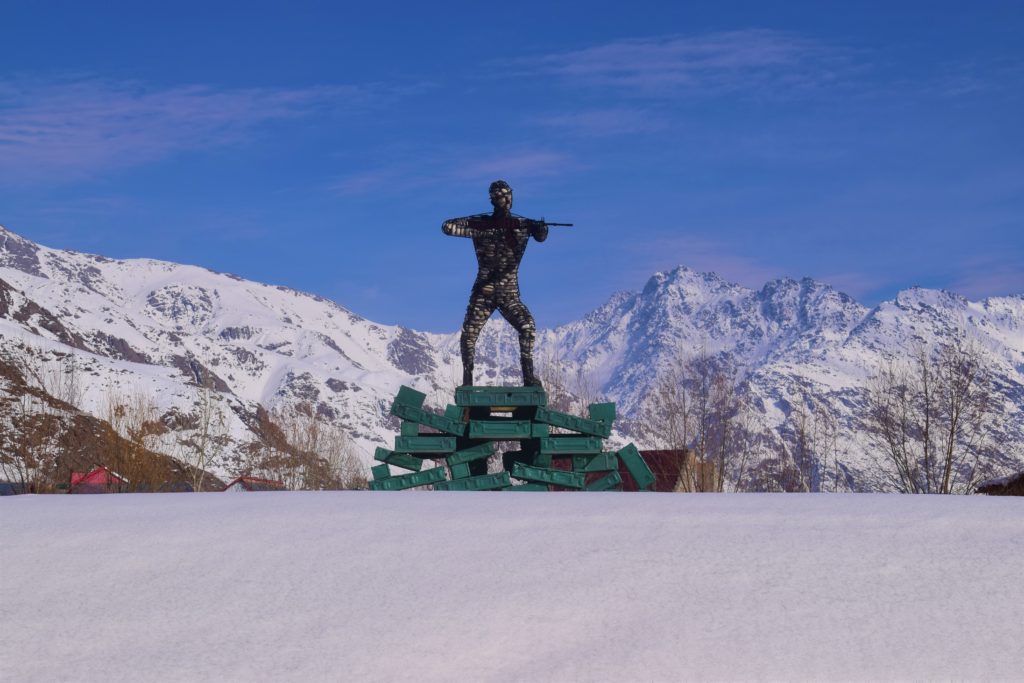
The genesis of the Kargil War Memorial in Dras goes back to the year 1999. The year of the Kargil War or Kargil Conflict as it was called. It was a bloody and armed conflict between the armies of India and Pakistan fought in Kargil district in one of the toughest terrains on earth.
It was mid of the year 1999 when Pakistani paramilitary troops along with Kashmiri insurgents covertly occupied strategic locations in the mountains that overlooked the Srinagar-Leh highway in Kargil district. These posts which were normally guarded by the Indian army had been vacated owing to the harsh winter season which made the terrain abominably inhospitable. It was a practice to again man the posts after the winter had receded and given place to the Spring season. Among the posts captured by the enemy were the heights of Tiger Hill, and Tololing Hill, among others. These were really strategic as these hills had a clear and unobstructed view of the Srinagar-Leh highway, which was the main supply line to the Indian Army.
“If death strikes before I prove my blood, I swear I’ll kill Death.”
Lt. Manoj Kumar Pandey
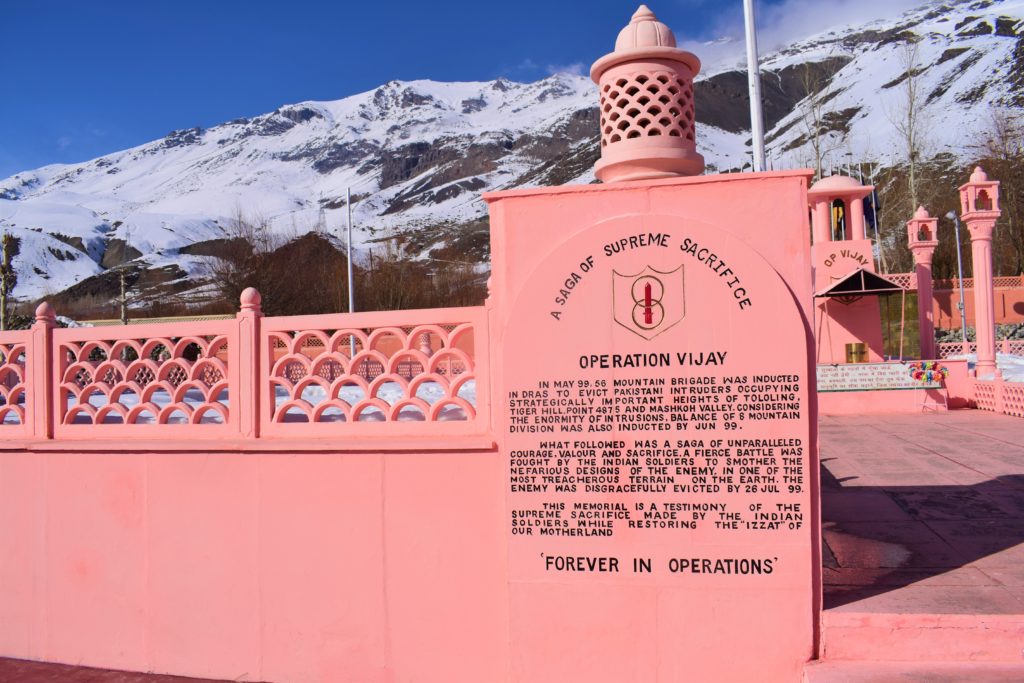
Operation Vijay was the name given to the operation to evict the intruders from the vantage position that they had captured. It was a challenging and almost impossible task as the enemy had the Indian soldiers in their line of sight. The Indian forces had to literally climb up the mountains in challenging terrain straight into the line of fire. But the brave Indian soldiers launched frontal and daring attacks on peaks as high as 18,000 feet and captured one post after another. It was July 26, 1999, by the time the fighting ceased, and all posts atop the Himalayan heights that overlooked the Kargil valley had been cleared and recaptured.

The Kargil war left 527 gallant Indian soldiers dead. On the enemy side, around 700 of the regular Pakistani army and almost 3,000 Mujahideen had been killed. This is the Kargil War story which is a glorious testimony to the bravery of the Indian forces and their heroism in the face of an almost impossible and hopeless mission.
“Either I will come back after hoisting the tricolour, or I will come back wrapped in it but I will be back for sure.”
Captain Vikram Batra
Kargil Vijay Diwas is celebrated on 26th July every year. Homage is paid to the Kargil War heroes on this day in Kargil in a solemn ceremony. In New Delhi on this day, homage is paid to the martyrs at the Amar Jawan Jyoti at India Gate, by the Prime Minister of India.
The Kargil War Memorial has been built by the Indian Army in the backdrop of Tiger Hill, Tololing Heights and Batra Peak, and other peaks in memory of the Kargil heroes. It lies on the same Srinagar-Leh highway that had been targeted by the enemy in 1999. It is about 5 kilometers from the city of Drass. Initially, a temporary and makeshift memorial had been built here in the year 2000, however, a full-scale memorial was completed in the year 2014. There have been additions and embellishments over the years to the Kargil War Memorial.
Inside The Kargil War Memorial | Visiting Kargil War Memorial
The city of Dras is covered with a soft white carpet of snow as we drive towards the Kargil War Memorial. The road is flanked by huge banks of fresh, powdery snow and a chill wind blows across from the Himalayan peaks. We arrive at the Kargil War Memorial that stands right on the Srinagar-Leh highway which is labeled as NH 1D.
A wide iron gate with the words, “Kargil War Memorial.” on a canopy atop it provides entry into the Memorial. Behind the gate. Right behind the gate is visible the snowy peaks of Tololong Heights. Visitors are required to sign the visitor book before being escorted into the memorial by the Army personnel who manage the Kargil War Memorial. An Army officer gives a briefing of the Memorial and also gives an account of the Kargil war and the circumstances in which Operation Vijay was launched. Stories remembering some of the Kargil heroes are narrated.
Vijaypath – Kargil War Memorial
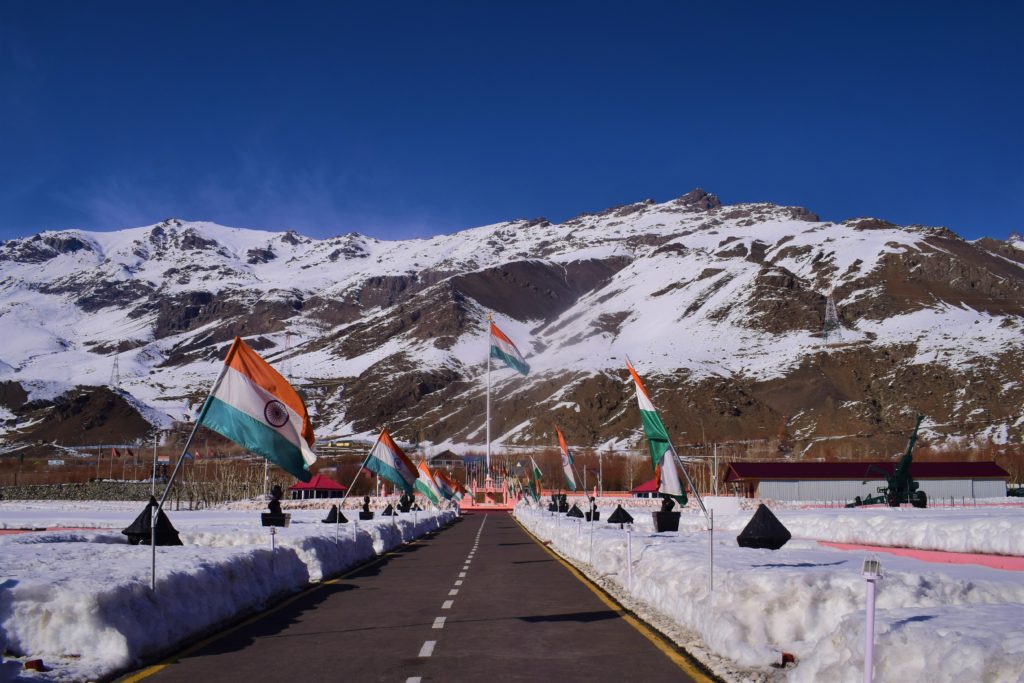
The path that leads to the Amar Jawan Jyothi is known as Vijaypath. The Vijaypath is aligned centrally to the Amar Jawan Jyothi and the entrance gate to the Kargil War Memorial. The Indian tricolor flags are placed at regular intervals on both sides of the Vijaypath. The flags are caressed by the wind blowing across the same peaks where the valiant Kargil War Heroes fought and died. The tricolors flutter in the wind offering perpetual obeisance to the martyrs of India.

The lawns that flank Vijaypath were buried under 4 to 5 feet of snow as it was winter when we visited. But black stone busts of the war heroes and plaques on either side of the path stood out defiantly amidst the snow all around. MIG 21’s are also displayed on either side of the Vijaypath.
Amar Jawan Jyothi – Kargil War Memorial

From the gate, a straight, paved pathway leads to the Amar Jawan Jyothi, which is a lamp that is kept burning continuously, irrespective of the season and weather.
There was a hush as we walked silently towards the Amar Jawan Jyothi. We were choked with emotion, realizing the place that we were walking on was not too long ago, a theatre of war, and today the many brave soldiers who had made the supreme sacrifice of their lives lay there in eternal sleep. The silent walk towards the Amar Jyoti Jawan was our way of offering tribute to the martyrs of the Indian Army.
The main structure inside the Kargil War Memorial at the end of the Vijaypath is made of pink sandstone. There are four columns at the four corners of a raised platform reached by a few steps. In the centre is the Amar Jawan Jyothi and above it is a rifle capped with a military helmet, a symbol of the unknown soldier.
The following verse from the Hindi poem, “Pushp Ki Abhilasha,” by the noted poet Makhanal Chaturvedi can be seen in front of the Amar Jawan Jyothi. These words are sure to make your eyes misty anytime, but they assume a special significance at the Kargil War Memorial, and one becomes overcome with emotion.
चाह नहीं, मैं सुरबाला के गहनों में गूँथा जाऊँ,
चाह नहीं प्रेमी-माला में बिंध प्यारी को ललचाऊँ,
चाह नहीं सम्राटों के शव पर हे हरि डाला जाऊँ,
चाह नहीं देवों के सिर पर चढूँ भाग्य पर इठलाऊँ,
मुझे तोड़ लेना बनमाली,उस पथ पर देना तुम फेंक!
मातृ-भूमि पर शीश- चढ़ाने,जिस पथ पर जावें वीर अनेक!

Behind the Amar Jawan Jyothi is a huge flag of India. This flag pole towers to a height of 100 feet and the flag that flutters atop it measures 37.5 feet by 25 feet and weighs about 15 kilograms. This flag was presented by the Flag Foundation of India.

“Beneath this earth young warriors sleep,” these words tug at your heartstrings at the Kargil War Memorial. These words are engraved on a huge brass plaque and below these words are engraved the names of the Kargil heroes, who laid down their lives for the country.

A Bofors gun stands to your right-hand side as you approach the Amar Jawan Jyothi. The Bofors gun had played a crucial role in the Kargil war and had inflicted heavy damage on the enemy forces.
Veer Bhumi- Kargil War Memorial
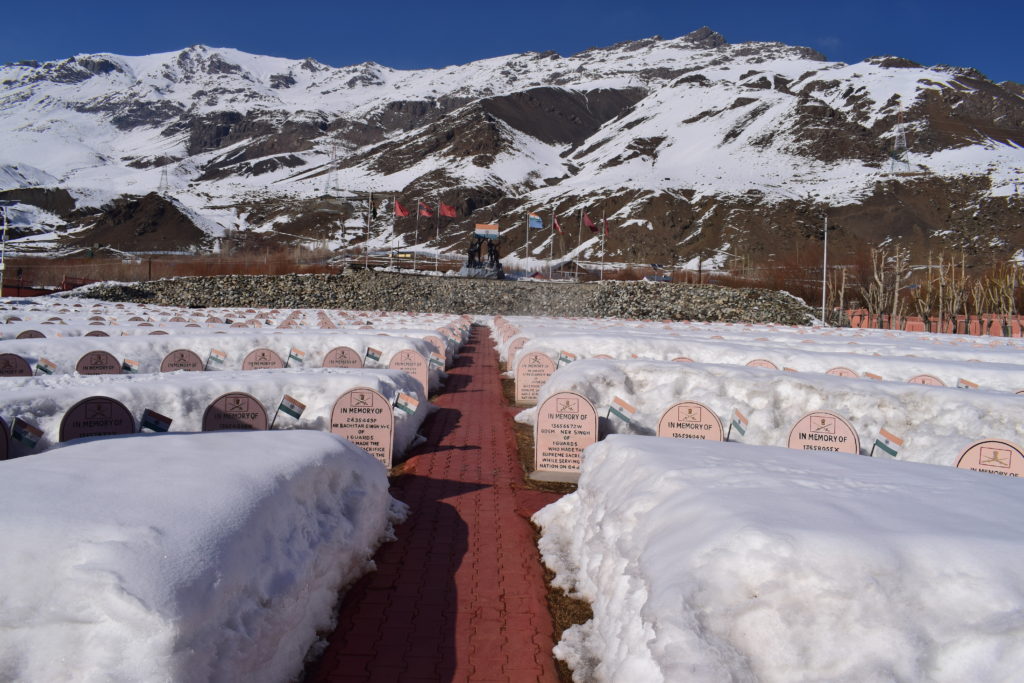
On the left-hand side of the Amar Jawan Jyoti stretches row upon row of tombs of dead Indian soldiers. This is known as Veer Bhumi. It has the names of soldiers of the 8th Mountain Divison killed in war since Independence. Snow had buried the epitaphs of the Bravehearts, and it was a poignant sight to witness the unending rows of stones with the names of our war heroes.
Hut Of Remembrance – Kargil War Memorial
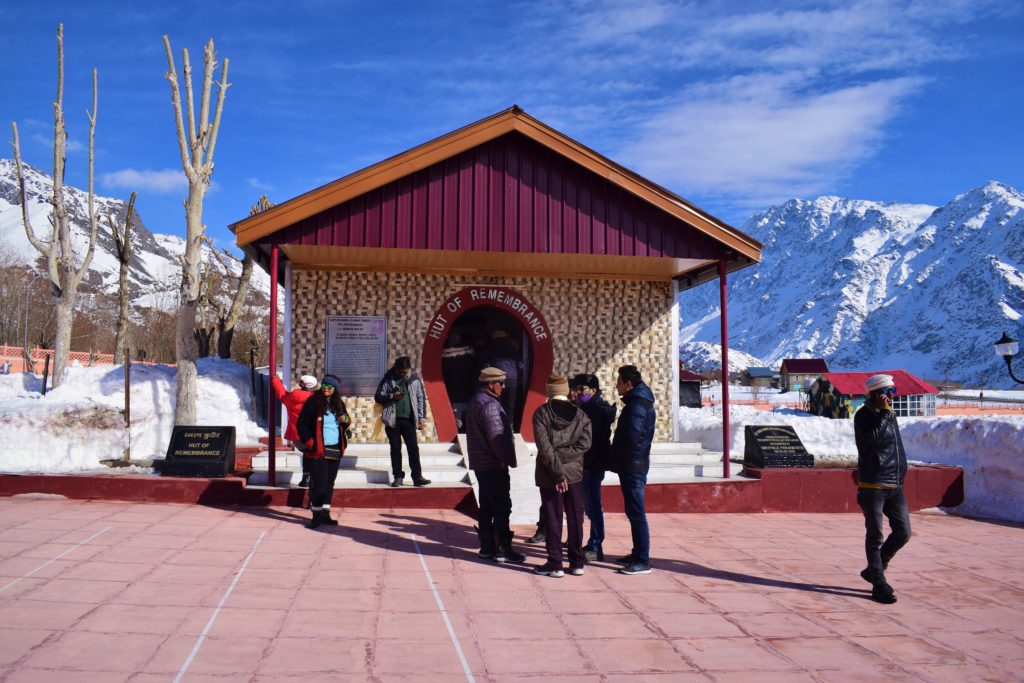
A little before the Amar Jawan Jyoti, on the right-hand side is the “Hut of Remembrance”, which houses the Captain Manoj Pandey Operation Vijay Gallery. The gallery houses photos and exhibits that bring alive the tension of the Kargil War and highlight the indomitable bravery displayed by the Indian soldiers.
Memory Lane At Kargil War Memorial

A special gallery that documents the events of Operation Vijay through models that show the different Indian posts on the Himalayan peaks like Tolong Heights, Tiger Hill, etc., is located to the right of the main entrance gate of the Kargil War Memorial. The Memory Lane was dedicated to the nation on the occasion of the 20th Kargil Vijay Diwas by the Defence Minister, Shri Rajnath Singh.
The visit to the Kargil War Memorial is an experience that touches you and leaves your mind-numbed with emotion and eyes moist. Yet, the heart soars with pride for being the citizen of a county whose soldiers have literally scaled the pinnacles of bravery and heroism.
As we prepare to leave the Kargil War Memorial after a pilgrimage of sorts, we are ushered into the restaurant near the entrance by the Army personnel, who insist on us having hot tea along with steaming hot Pakoras before we take our leave.
We finally bid adieu to the sacrosanct land of Kargil with images of the Kargil War Memorial etched in our memories forever.
Kargil War Memorial Timings & Entry Fees
There is no entry fee for visiting the Memorial and entry is free. The Kargil War Memorial is open on all days and can be visited anytime during the day when there is daylight. The Army Personnel who man the Memorial guide and explain about the Kargil war, Operation Vijay, and the Kargil War Memorial.
Other Places To Visit In Dras Valley

The Kargil War Memorial is definitely one Of the top attractions in Kargil Ladakh, there are other places to visit within the Deas valley as well as in other parts of the Kargil district. Here are some of the places that you must visit in the Dras Valley.
Draupadi Kund
Draupadi Kund is a small pond that is believed to date back to the times of the Mahabharata. The Pandavas are believed to have visited this place on their way to the Himalayas.
Goshan
Goshan is a beautiful village, that has developed as a beautiful picnic spot. It is also the venue for exciting Horse Polo games.
Bhimbat | Bhembat
Bhimbat is a small village near Drass, at a distance of about 5 kilometers. It is famous for a rock which according to local myth is the solidified body of Bhima, one of the Pandava princes from the great Indian epic, Mahabharata.
Stagsboo Drass
Stagsboo is another interesting place to visit near Drass. The place has Buddhist rock carvings. These include carvings of Maitreya Buddha and also Avalokiteshvara who is is an earthly manifestation of the self-born eternal Amitabha Buddha.
How To Reach Kargil War Memorial – Location
The Memorial is in Drass on the National Highway. Drass to Kargil distance is about 64 kilometers. One can drive from Kargil or Leh or Srinagar to reach here.
How To Reach Kargil War Memorial By Air
There is no commercial airport in Kargil. Kargil War Memorial is at a distance of about 269 kilometers from Leh airport and about 171 kilometers from Srinagar Airport. Both these airports are well connected to other parts of India. One can fly to either Srinagar or Leh and travel by road to the Kargil War Memorial in Drass.
How To Reach Kargil War Memorial By Road
The location of Kargil War Memorial is right on the Srinagar-Leh highway. Drass to Kargil distance is about 64 kilometers. One can drive to the Kargil War Memorial either from Leh or Srinagar or from Kargil.
How To Reach Kargil War Memorial By Rail
The nearest major railway station to the Kargil War Memorial is in Jammu, which is at a distance of about 428 kilometers away.
Best Time To Visit Kargil War Memorial
Kargil War Memorial can be visited at any time of the year. Winters are extremely cold and there would be heavy snowfall. However, the War Memorial has a different look and is covered in a carpet of snow. The summer months are the best time to visit the Kargil War Memorial, these are from May to September.
Where To Stay While Visiting Kargil War Memorial
Drass is emerging as a tourist destination in its own right. One can choose to stay in the Tourism Department Guesthouse in Drass. There are more options to stay in Kargil which is about an hour’s drive from the Kargil War Memorial.
Kargil War Memorial – Where To Eat
There are a few small snack and tea shops near the Kargil War Memorial. There are better dining options in Drass. However, it is best to have Lunch at Kargil itself. Coffee, tea, and snacks are served by the Army at the Kargil War Memorial.
Tips For Visiting Kargil War Memorial
Here are some tips for visiting the Kargil War Memorial.
- It will be extremely cold in Ladakh and more so in Dras, which is the second coldest inhabited place on earth, during the winter months, hence make sure you are dressed warmly
- Kargil is on a lesser elevation as compared to Leh, hence there will not be an issue of AMS, however, if you are traveling from Kargil to Leh, be prepared for AMS (Acute Mountain Sickness).
- Ensure that proper decorum is maintained and you are dressed appropriately while visiting the Kargil War Memorial
- Photography is allowed inside the Kargil War Memorial, however, visitors are requested not to insist on photographing and being photographed with the Army personnel
- Photography is prohibited inside the Amar Jawan Jyothi area
Mobile Network In Kargil
It is important to note that prepaid connections do not work in Ladakh. Be it Leh, Kargil, or Dras, your prepaid connection will not work. BSNL and Airtel post-paid connections work in Ladakh, including in Leh, Kargil, and Dras.
