


-
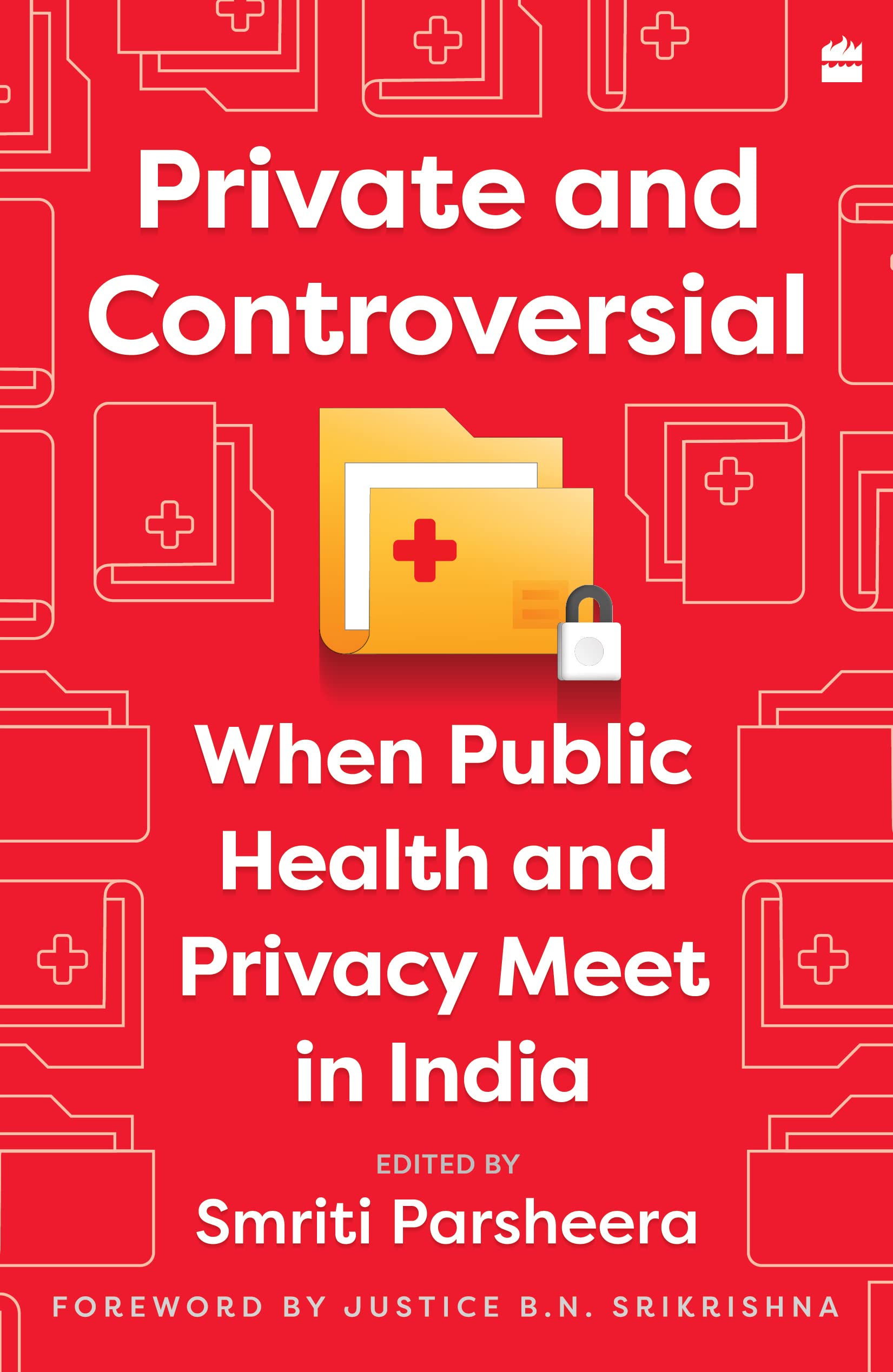
The book “Private and Controversial: When Public Health and Privacy Meet in India” has been edited by Smriti Parsheera.
-
The COVID-19 pandemic has illustrated how actions taken for the management of a public health emergency can bear significant implications for individual liberty, dignity and privacy. Collection of health data, contact tracing, mandatory testing, and vaccine passports are some examples of such interventions.
-
Set against the background of the COVID pandemic, creation of the National Digital Health Mission, and the ongoing debate on data protection, the collection of essays in this book will explore the intersection between privacy and public health. The contributors include experts and practitioners from the fields of public health, law, economics, public policy, and public administration.
-
Read an excerpt from the book below.
Throughout the COVID-19 pandemic, individuals have been asked to accept an ever-increasing number of privacy-violating measures by the government, private employers and resident welfare associations (RWAs). The scope of disease surveillance has expanded, aided in part by the developments in technology and big data. This has significantly impacted our bodily, informational, spatial, decisional, associational and behavioural privacy.
In India, privacy-invading disease surveillance measures – both physical and digital – have taken different forms at the central and state levels. These include contact tracing, quarantine enforcement, affixing posters outside homes of COVID-19 patients, stamping of hands with quarantine details, door-to-door data collection by community health workers and mandatory temperature checks by employers. Despite the variety of measures employed, the COVID surveillance debate in India has focused predominantly on the use of contact tracing and the Aarogya Setu app.
The issue of surveillance amidst the COVID-19 pandemic is important for three reasons. First, emergencies help normalize the deployment of surveillance tools. They shift the goal post about the acceptable level of intrusion by the government and private actors into the private lives of citizens. Given the ‘long tail’ of a pandemic (as opposed to a finite and limited crisis such as a hurricane or tsunami), the extended use of extraordinary technological measures can hasten a shift in privacy norms. This increases an already wide asymmetry of power between the citizen and state/private entities.
Second, even if some of these COVID surveillance measures may not have achieved the desirable level of efficiency, they are now part of the government toolkit and are more likely to be reintroduced (in a modified form) during the next emergency or public health crisis.
Third, the debate in India is further complicated by the fact that both the central and state governments have the power to legislate on preventive aspects of health. Public health is a state subject, while the prevention of the spread of contagious disease across states is on the concurrent list. The result is a patchwork of surveillance measures deployed at the central and the state levels, without clarity on how they interact with each other. Moreover, in the absence of a comprehensive data protection law or a strong conception of data rights, the protection of a citizen’s privacy is almost entirely at the mercy of the Indian state.
While studies abroad have analysed the impact of new public and private disease-surveillance measures on the right to privacy, there is a dearth of similar research here. There have been few attempts at comprehensive mapping of the types of surveillance mechanisms adopted during the COVID-19 pandemic in India.
This chapter attempts to present an authoritative account of the physical and digital surveillance measures employed by governments and private corporations across India. It documents the different surveillance mechanisms adopted during the pandemic by mapping them into five public health objectives, namely, (a) symptom tracking, (b) mobility and density mapping, (c) quarantine enforcement and location tracking, (d) contact tracing, and (e) travel passes and vaccination. In articulating these objectives, the chapter adopts the parameters put forth by Boudreaux et al. to evaluate data privacy during pandemics. There is no doubt that the right to privacy is not absolute. It can be validly restricted by the state on grounds of public health, especially in extraordinary times such as the COVID-19 pandemic. However, any such restriction must be backed by a specific law, bear a rational connection to the government’s aim, be necessary, and balance competing rights. Next, it evaluates the privacy and proportionality concerns emanating from the use of such surveillance measures. It then considers their suitability and effectiveness, that is, whether the loss of privacy has been accompanied by an appropriate public health benefit. The third and fourth sections will focus on specific interventions, instead of analysing the entire gamut of disease-surveillance measures. Finally, it concludes with recommendations for the way forward.
Excerpted with permission from “COVID-19 Surveillance in India: A Bridge Too Far?” by Vrinda Bhandari, from Private and Controversial: When Public Health and Privacy Meet in India, edited by Smriti Parsheera, HarperCollins India. Read more about the book here and buy it here.
