

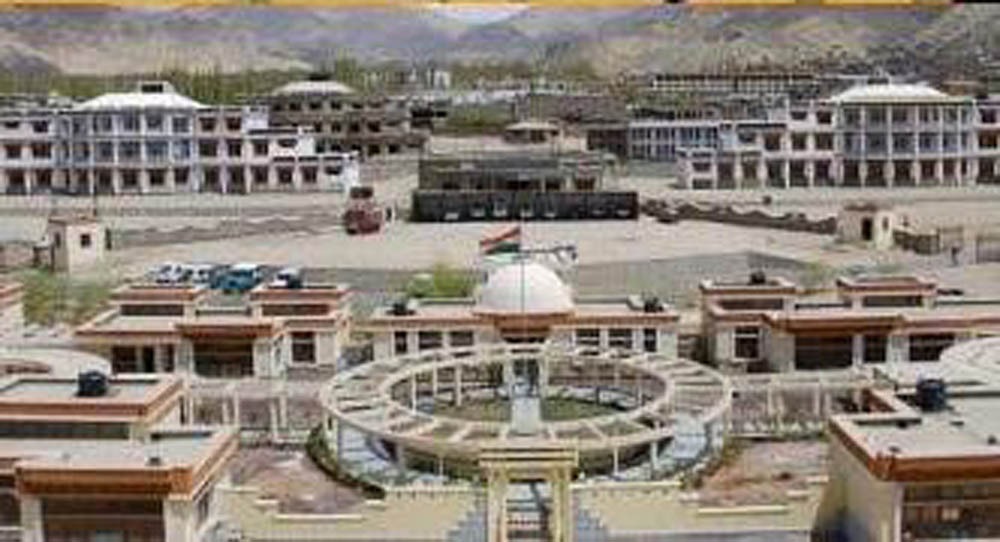
Leh: This may sound ‘unconstitutional’ but the Councillors in Ladakh have threatened to boycott the upcoming Independence Day celebrations if there demands of ‘empowerment’ were not met by or before the third anniversary of the formation of Union Territory.
Ladakh and Jammu and Kashmir observed third anniversary of their status as Union Territories on Friday, August 5.
Following some complaints, earlier this month the Ladakh Union Territory administration issued a stepped up and revised set of protocols and courtesies for the Councillors of the Ladakh Autonomous Hill Development Councils of Leh and Kargil. The General Administration Department had on August 2, issued an order in a ‘strict language’ enjoining upon all officials to make sure that the order is implemented in letter and spirit on all occasions.
However, the next day, on August 3, the LAHDC Leh issued a press communication which skipped any mentioned to the previous day’s GAD order and asked government for define official status of the Councillors before August 5. The press release issued on the official letter head of the LAHDC Leh and signed by none warned the government that the Councillors would boycott the Independence Day celebrations if their status was not announced by August 5.
The statement was followed by a press conference. The next day Councillors of Kargil Council also addressed a press conference. The Kargil Councillors said that they ‘condemn’ the government order on status and protocol.
Also Read | Is Leh Hill Council planning a parallel I-Day event?
None of the Councillors have so far outlined the exact demand or list of items in their protocol. They have only called for ‘defining’ the status and empowerment of Councils.
The Autonomous Hill Developments Councils, it may be mentioned here, came into being in mid 1990s, over two decades before the formation of the Union Territory. However, when Ladakh was carved out as Union Territory on August 5, 2019, the Parliament did not make any separate rules for definition for the Hill Councils.
Now since Ladakh is a Union Territory -an entity under direct administrative control of the Center -the policy, such as with regards to further definition of the Hill Council, is an exclusive domain of the Ministry of Home Affairs.
What are key points in GAD’s revised order?
As per the order issued by Commissioner Secretary, General Administration Department Ajeet Kumar Sahu all concerned officials have been asked to ensure providing due courtesies and follow proper protocol while dealing with the Councillors of the LAHDCs during all ceremonial functions, occasions within the territorial limits of the respective districts of Ladakh.
Deputy Commissioners of the concerned districts have been asked to ensure deputing a Nodal Officer exclusively for the Councillors of LAHDCs for ensuring delivery of invitation cards, coordinating their arrival to the venue and their seating during National and Ceremonial functions.
Also Read | Ladakh Admin approves RDSS Action Plan for 2022-23
“The Nodal Officer will also ensure proper reception of Councillors at the venue and escort them to their respective seats,” the order reads.
“As far as possible, their seating will be arranged in the same enclosure where the WIP and other elected representatives (HCEC/ HMP/HECs) have been seated. In case of space constraints and other security-related requirements of the WIP, they may be seated in a different enclosure which should be arranged/located as near as possible to the WIP arena and should be earmarked separately,” the order reads.
The order further reads that in other official functions, elected representatives of the area in whose jurisdiction the function is being organised should be invariably invited. The organiser concerned of the event shall ensure their proper reception and order of seating on the dais/stage/enclosure, during the function.
“Where any meeting convened by the administration is to be attended by elected representatives (except such meetings where there is a prescribed legal regulation), special care should be taken to ensure that notice is given to them well in advance , specifying therein the date, time and venue of the meeting. In addition, the receipt of such intimation should be confirmed by the officer concerned,” the order reads.
The order further reads that the rank and status of other dignitaries will continue to be governed as per the Table of Precedence of Government of India (President’s Secretariat) dated 26th July 1979, as amended and SROs notified by the erstwhile State of J&K including instructions issued by the Administration from time to time for courtesies to be extended and protocol to be followed for Hon’ble CECs, Hon’ble MP and Hon’ble ECs within the territorial limits of the Union territory of Ladakh and the districts of Leh and Kargil.
“All Departments/Head of Offices/ organising offices in UT Administration of Ladakh shall ensure that the above basic principles and instructions are followed by all concerned, both in letter and spirit. Any violation in this regard shall be considered misconduct under the relevant conduct rules,” the order reads.
This list of protocols and courtesies is much better and higher than what has been accorded to the Chairpersons of the Block Development Councils and Councillors of the District Development Councils in Jammu and Kashmir.
Even as the Panchayati Raj Institutions both in Ladakh and Jammu and Kashmir and Ladakh are the Constitutional Bodies, the Hill Development Councils in Ladakh are the statutory bodies for which the Ministry of Home Affairs has issued not separate or new guidelines after formation of the Union Territory.
What does Warrant of Precedence say?
The Warrant of Precedence is a list in which the functionaries, dignitaries and officials are listed for ceremonial purposes. The WoP lays down the relative precedence in terms of ranks of important functionaries.
For close to two decades when the Councils were is existence and Ladakh was part of the Jammu and Kashmir State, the J&K government didn’t define any protocols or privileges for the Hill Councils. In fact, the Jammu and Kashmir Warrant of Precedence didn’t mention even the Chief Executive Councillors or the Councillors. This issue was never raised by the Hill Council with the Jammu and Kashmir state government even as Councils have been run by legendary Ladakhi politicians from time to time.
At two distinct occasion, the Jammu and Kashmir government passed two orders pertaining to status and powers of the Chief Executive Councillors and Executive Councillors, both have been maintained by the new Union Territory administration. However, the Hill Council, particular in Leh, has been demanding a step up but that has to be resolved at the level of the Center.
Also Read | Leh celebrates 6th edition of Ladakh dPal rNgam Duston
What can UT admin do?
As far as these ‘unspecified’ demands of the Councillors with regards to ‘defining their status’ is concerned, there is very little that the Union Territory administration can practically do. Ladakh is a Union Territory without Legislature. In this case, any revision of the structural powers of the Hill Councils and Councillors has to happen at the level of the Ministry of Home Affairs.
Even when the issue is considered by the Ministry of Home Affairs, the Councillors are unlikely to get a preferential or privileged treatment. Ladakh also has vibrant Panchayati Raj Institutions and Urban Local Bodies which are mandated by the Constitutional and Legislative backings. An exclusive privileged position of the Councillors may invite reaction from the BDC Chairpersons, who are also respectable Ladakhis and may like to ask for equal treatment.
